



Home / News
Why International Clients Continue to Choose Dubai for Bespoke Residential Architecture
Aug 14, 2026
Most international clients commissioning a home in Dubai have built before. They arrive with a clearer understanding of what they want than first-time clients. This matters more than it might first appear. A client building for the first time is learning what they want as the project unfolds. A client who has already built elsewhere arrives with clarity, and with comparison. They know what a good architect feels like to work with, and they know what it feels like when the relationship does not go well. Dubai continues to be chosen by this kind of client, repeatedly, for reasons that go beyond the city itself. For a luxury architect in Dubai, this is the client who matters most to understand. They are not choosing a location. They are choosing a way of being listened to.
A Market That Rewards Experience, Not Just Ambition
Dubai's residential market has matured considerably over the past decade. Where early growth was driven by scale and visible ambition, the market today is shaped by clients who have specific, often quite particular, expectations of how their home should work. This shift has changed what international clients look for in an architect. Confidence and vision are no longer enough on their own. Clients want to know that an architect has practiced in more than one context, has seen how different cultures approach privacy, hospitality and daily life, and can bring that breadth into a single home without it feeling assembled from unrelated references. It is a demanding standard, but it is also a fair one. A home is not a short-term decision. Getting it right requires an architect who has made the same decision, in different forms, more than once.Lee and Sasha's International Perspective
This is where Nellis Architecture's own background shapes the way the practice works with clients from overseas. Lee Nellis and Sasha Kiseleva did not begin their careers in Dubai. Both practiced internationally first, working across different regulatory systems, climates and cultural expectations of what a home should provide, before establishing the studio here. That earlier experience continues to inform how the practice listens. A client arriving from London describes space differently to a client arriving from Singapore, even when they are asking for something similar. Recognising that difference, quickly and without requiring the client to explain themselves twice, is one of the quieter advantages of having worked internationally before working in Dubai. As Lee Nellis often reflects, the value of that earlier experience was never about collecting references. It was about learning to ask better questions, and learning which questions matter regardless of where a project is being built.What International Clients Are Really Comparing
 When an international client evaluates architects in Dubai, they are rarely comparing portfolios in isolation. They are comparing how it felt to be heard during an earlier project, and measuring a new architect against that experience.
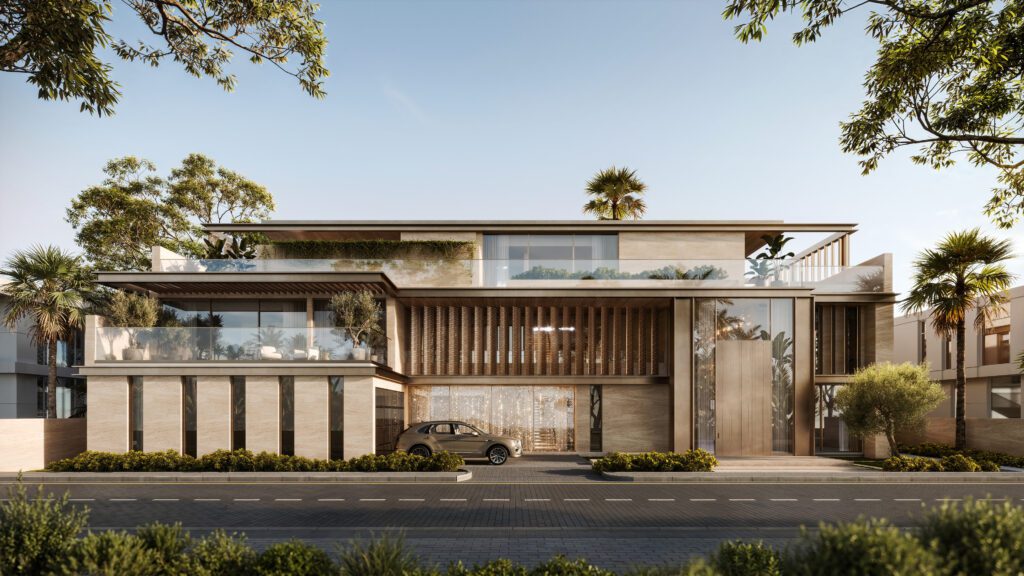
This is why process matters as much as design output. Clients who have commissioned homes such as Villa Aurea often describe the value of the relationship as much as the value of the finished building. A considered process, with clear communication and realistic timelines, gives an international client confidence that a home commissioned from a distance will still reflect their intentions closely.
For clients who are managing a project while based in another country, this reassurance is not a minor detail. It is often the deciding factor in choosing one architect over another.
When an international client evaluates architects in Dubai, they are rarely comparing portfolios in isolation. They are comparing how it felt to be heard during an earlier project, and measuring a new architect against that experience.
This is why process matters as much as design output. Clients who have commissioned homes such as Villa Aurea often describe the value of the relationship as much as the value of the finished building. A considered process, with clear communication and realistic timelines, gives an international client confidence that a home commissioned from a distance will still reflect their intentions closely.
For clients who are managing a project while based in another country, this reassurance is not a minor detail. It is often the deciding factor in choosing one architect over another.
Designing for a Client Who Has Seen the Alternative
An international client who has already built a home elsewhere brings a useful kind of scrutiny to a new project. They notice small inconsistencies that a first-time client might overlook. They ask direct questions about material longevity, maintenance and how a space will perform years after completion, not simply on the day it is finished. This scrutiny tends to produce better buildings. Projects such as Villa reflect a design process shaped by clients who already understood what they did not want, as much as what they did. That clarity, uncomfortable as it can sometimes be during the design stage, is often what leads to a more resolved and durable home. A luxury architect working in Dubai regularly encounters this kind of client, and the ones who continue to be chosen are the ones who treat that scrutiny as useful information, rather than as an obstacle to be managed.What Keeps Clients Choosing Dubai, Year After Year
 Dubai's appeal to international clients is often described in terms of lifestyle or investment potential. These factors matter, but they do not fully explain why clients return to commission a second home, or recommend an architect to friends building their first.
What keeps clients choosing Dubai, and choosing the same architects within it, is a quieter form of trust. It comes from having been listened to properly the first time. It comes from an architect who understood their life well enough to design around it, rather than asking them to adapt to a concept.
As Sasha Kiseleva has put it, the goal was never to make a client feel like they had commissioned a building. It was to make them feel like the building had been designed around the life they were already living.
That, more than any single feature of the city, is why international clients continue to choose Dubai for architecture of this calibre. The city made the decision possible. The right architect is what makes it feel right, years after the work is complete.
Dubai's appeal to international clients is often described in terms of lifestyle or investment potential. These factors matter, but they do not fully explain why clients return to commission a second home, or recommend an architect to friends building their first.
What keeps clients choosing Dubai, and choosing the same architects within it, is a quieter form of trust. It comes from having been listened to properly the first time. It comes from an architect who understood their life well enough to design around it, rather than asking them to adapt to a concept.
As Sasha Kiseleva has put it, the goal was never to make a client feel like they had commissioned a building. It was to make them feel like the building had been designed around the life they were already living.
That, more than any single feature of the city, is why international clients continue to choose Dubai for architecture of this calibre. The city made the decision possible. The right architect is what makes it feel right, years after the work is complete.
Design Intent Summary
This article positions Nellis Architecture's international client relationships around Lee and Sasha's personal backgrounds practicing outside the UAE before establishing the studio in Dubai. It reframes the question of why clients choose Dubai away from lifestyle and tax factors, and toward the quality of listening and process that an experienced, internationally minded architect brings to a bespoke residential commission.How Dubai Climate Shapes Every Decision a Luxury Architect Makes
Aug 14, 2026
Why International Clients Continue to Choose Dubai for Bespoke Residential Architecture
Aug 11, 2026
Can Architecture Make a Luxury Brand More Desirable? The Psychology Behind Premium Retail Design
July 30, 2026
Designing Oceanfront Homes That Feel Private Without Closing Off the View
July 28, 2026
Contemporary Luxury Architecture: What the World’s Best Homes Have in Common
July 9, 2026
Systems Thinking in Architecture: Designing Systems, Not Just Villas
July 7, 2026
UAE Architecture During Global Uncertainty: How Dubai’s Architecture Sector Continues to Grow Through Global Change
July 6, 2026
Architecture and Identity in the UAE | Contemporary Middle Eastern Design | Nellis Architecture
July 5, 2026
Contemporary Luxury Architecture: What the World’s Best Residential Homes Have in Common
July 2, 2026
Dubai as a Global Design Base | Luxury Architect Dubai | Nellis Architecture
June 28, 2026
Smart Home Automation Dubai | What Belongs in a Luxury Villa | Nellis Architecture
June 3, 2026
Designing for Balance, What Traditional Chinese Architecture Teaches Modern UAE Homes
May 31, 2026
Behaviour-Led Luxury Home Design Dubai | Residential Architecture UAE | Nellis Architecture
May 30, 2026
Mediterranean-Inspired Luxury Home Design Dubai | Residential Architecture UAE | Nellis Architecture
May 25, 2026
When Design Is Tested What Actually Matters | Luxury Villa Design Dubai | Nellis Architecture
May 18, 2026
Beyond Aesthetics: Designing Spaces That Last | Luxury Home Design Dubai | Nellis Architecture
May 15, 2026
Architectural Design Across the UAE | Luxury Home Design Dubai | Nellis Architecture
May 8, 2026
How We Approach Dubai Villa Interior Design on Palm Jumeirah | Nellis Architecture
May 6, 2026
How to Choose an Architecture Firm in Dubai | Luxury Villa Design UAE | Nellis Architecture
April 6, 2026
Why Longevity Is Becoming the New Definition of Luxury
April 4, 2026
The Islamic Garden Principles in Contemporary Palm Jumeirah Villa Design
April 2, 2026
The Difference Between Expensive and Valuable in Luxury Architecture
March 30, 2026
The Architecture of Shade in the UAE
March 27, 2026
Living With the Sea: What Coastal Architecture Really Requires on Palm Jumeirah
March 24, 2026
From Mashrabiya to Modern Screens: Privacy in Architecture and What It Means for Dubai Villas Today
February 15, 2026
What Makes a Palm Villa Truly Luxury | Luxury Villa Design Dubai | Nellis Architecture
February 14, 2026
Modern vs Contemporary Villas on the Palm | Luxury Villa Design Dubai | Nellis Architecture
February 13, 2026
How to Maximise Views Without Sacrificing Privacy | Luxury Villa Design Dubai | Nellis Architecture
February 3, 2026
Future-Proofing a Palm Jumeirah Home | Luxury Villa Design Dubai | Nellis Architecture
January 25, 2026
Common Mistakes When Building High-End Homes in Dubai | Luxury Villa Design | Nellis Architecture
December 29, 2025
Indoor–Outdoor Living in the Gulf | Climate, Shading and Landscape | Nellis Architecture
December 24, 2025
Designing Stillness on the Sea | 5-Star Single Residence Winner | Nellis Architecture
December 24, 2025
Designing the Extraordinary: Onyx and the Architecture of Confidence
December 22, 2025
25 Questions: The Art of a Good Architectural Brief | Nellis Architecture
December 18, 2025
Water as Experience | Pools, Rills and Thermal Comfort in Gulf Architecture | Nellis Architecture
December 17, 2025
Nellis Architecture 2025 Reflections: Culture, Clarity and the Year of Momentum
December 15, 2025
The Craft of Time: Why Enduring Architecture Matters
November 25, 2025
Sustainable Architecture for Dubai Homes
November 24, 2025
Miraia, Award-Winning 5-Star Single Residence | International Property Awards 2025
November 21, 2025
Heritage and Innovation in Dubai Architecture: How Tradition Meets Modern Design
November 07, 2025
Beachfront Resilience: Salt, Wind, And Glazing
November 01, 2025
AI In Home Design: Useful Or Hype?
September 30, 2025
Quiet Luxury and the Secret of Wabi-Sabi
September 24, 2025
Bespoke Design for Dubai Homes
August 15, 2025
Full Circle Moments and Firsts: A Conversation with Anastasia, Intern at Nellis Architecture
August 11, 2025
Seeing Beyond the Surface: My Journey in Architectural Visualisation
July 22, 2025
When the Brief Comes Pre-Built. A studio reflection with Pieter, Ben and Quinton | Nellis Architecture
July 9, 2025
Introducing Margaret – and Why Landscape Architecture Isn’t Just “Nice to Have”
July 1, 2025
Living Tomorrow: Reflections on the Future of Home Design
June 3, 2025
Building Trust Not Just Buildings: Marketing the Nellis Way
April 14, 2025
How the World Got Smaller: Architecture, Tech, and Keeping Design Real
May 1, 2025
Crafting Light, Telling Stories: A Reflection on Milan Design Week 2025
March 19, 2025
Using Historical Learnings Today
February 2, 2025
Visiting Vitrocsa in Switzerland: Nellis Architecture x GLASSLINE
January 31, 2025
Crafting Wellness at Nellis Architecture: A Year of Reflection and Growth
December 20, 2024
Nellis Architecture X Bauhaus: The Power of Collaboration in Property Projects
December 6, 2024
Lee Nellis: A Journey Through Architecture
November 6, 2024