



Home / News
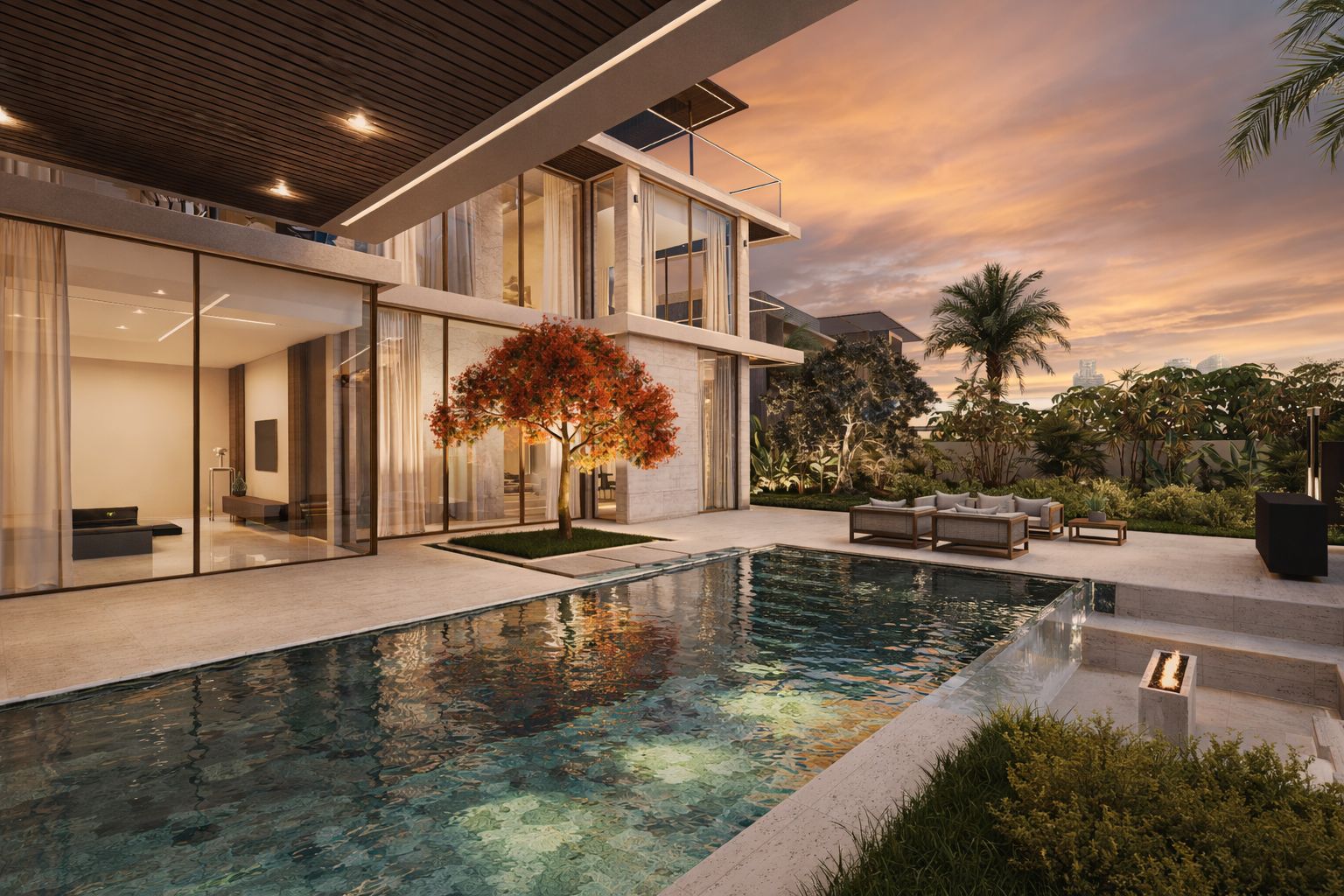
Behaviour-Led Luxury Home Design Dubai | Residential Architecture UAE | Nellis Architecture
May 31, 2026
A Framework for Spaces That Work
Across Dubai’s most established residential communities, from Palm Jumeirah to Emirates Hills, there is a growing shift in how people evaluate their homes. It is no longer enough for a space to feel visually resolved. Increasingly, clients are asking a quieter question. Does this space actually work for how we live? This shift reflects a broader change within luxury residential architecture. For many years, design has been discussed in abstract terms, proportion, balance, materiality. While these remain important, they do not fully explain why some spaces feel intuitive and others feel slightly unresolved, even when they are technically well executed. What we have fund, both in practice and observation, is that successful spaces tend to answer a small number of fundamental questions. These are not stylistic. They are behavioural. They relate to how people enter, move through, engage with and settle within a space. Among Dubai architects and leading architecture firms in Dubai, this way of thinking is becoming more relevant as projects grow in scale and complexity. The challenge is not adding more, but ensuring that what is designed aligns with how people actually use it. As Matas Belevicius often reflects, architecture should not require explanation. It should feel immediately understandable, even if the thinking behind it is carefully considered.Context and Transition, How a Space Prepares You
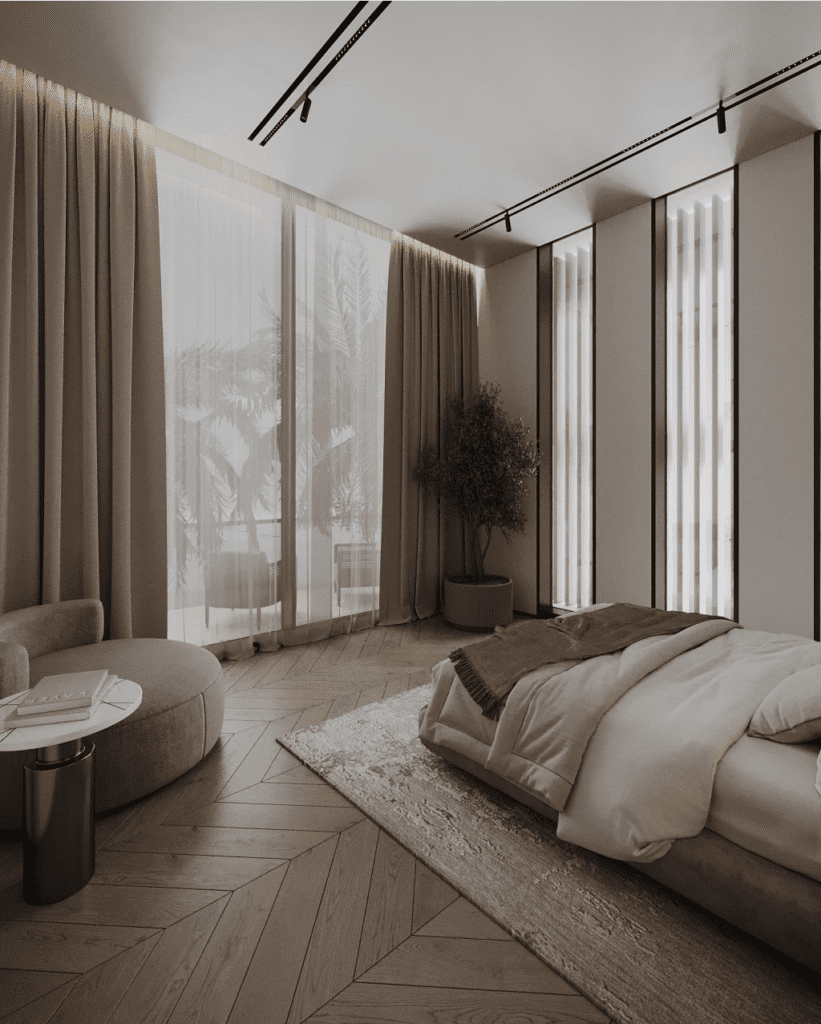 The first question every space should answer is simple. Does it prepare you for what comes next?
In many contemporary villas, particularly within high-end developments, spaces are often connected too abruptly. A large open living area may follow directly from an entrance, or a private space may sit too close to a social one. While this can feel efficient, it often removes an important layer of experience.
Transitions matter because they allow the mind to adjust. Moving from outside to inside, from public to private, or from active to quiet requires a subtle shift in perception. Without this, spaces can feel disjointed, even if they are visually cohesive.
In villa design across Palm Jumeirah and Emirates Hills, this is becoming increasingly evident. Homes that feel calm tend to use thresholds carefully. This may take the form of a shaded entrance, a change in ceiling height, or a shift in material underfoot. These are not dramatic gestures, but they signal movement and progression.
Architectural design services that prioritise this thinking create spaces that feel more intuitive. Rather than forcing immediate engagement, they allow the experience of the home to unfold gradually. Smart home automation can support this through lighting sequences or environmental adjustments that respond as someone moves through the space. However, the underlying architecture must establish the logic first. As Quinton Murdoch often notes, clarity in construction is tied closely to clarity in design intent. When transitions are well considered early on, they are more likely to be executed accurately on site, maintaining the integrity of the experience.
The first question every space should answer is simple. Does it prepare you for what comes next?
In many contemporary villas, particularly within high-end developments, spaces are often connected too abruptly. A large open living area may follow directly from an entrance, or a private space may sit too close to a social one. While this can feel efficient, it often removes an important layer of experience.
Transitions matter because they allow the mind to adjust. Moving from outside to inside, from public to private, or from active to quiet requires a subtle shift in perception. Without this, spaces can feel disjointed, even if they are visually cohesive.
In villa design across Palm Jumeirah and Emirates Hills, this is becoming increasingly evident. Homes that feel calm tend to use thresholds carefully. This may take the form of a shaded entrance, a change in ceiling height, or a shift in material underfoot. These are not dramatic gestures, but they signal movement and progression.
Architectural design services that prioritise this thinking create spaces that feel more intuitive. Rather than forcing immediate engagement, they allow the experience of the home to unfold gradually. Smart home automation can support this through lighting sequences or environmental adjustments that respond as someone moves through the space. However, the underlying architecture must establish the logic first. As Quinton Murdoch often notes, clarity in construction is tied closely to clarity in design intent. When transitions are well considered early on, they are more likely to be executed accurately on site, maintaining the integrity of the experience.
Richness, Giving the Eye Something to Engage With
The second question is whether a space offers enough to hold attention without overwhelming it. In many modern interiors, there is a tendency towards either extreme simplicity or excessive layering. Both approaches can create tension. A space that is too minimal can feel empty or unfinished, while one that is overly detailed can feel demanding. Richness, in this context, is not about decoration. It is about providing subtle variation that allows the eye to move comfortably. This may be achieved through material depth, controlled texture or the way light interacts with surfaces. In luxury home design in Dubai, we are seeing a more measured approach emerge. Rather than relying on contrast or statement elements, spaces are composed with a consistent palette that introduces variation through scale and detail. This allows the environment to feel engaging, but also stable. Dubai villa interior design is increasingly moving in this direction. Interior design companies in Dubai are selecting materials that age well, respond to light and create continuity across spaces. This contributes to a sense of calm that is sustained over time, rather than created through initial impact. Sustainable architecture in Dubai supports this through the use of materials that behave naturally within the climate. Surfaces that soften light, rather than reflect it harshly, reduce visual fatigue. These decisions are often subtle, but they significantly influence how a space feels on a daily basis. Advanced 3D visualisation tools allow these qualities to be tested before construction. By understanding how light and material interact, architecture firms in Dubai can ensure that spaces maintain depth and variation without becoming visually complex.Attraction, Where the Space Naturally Draws You
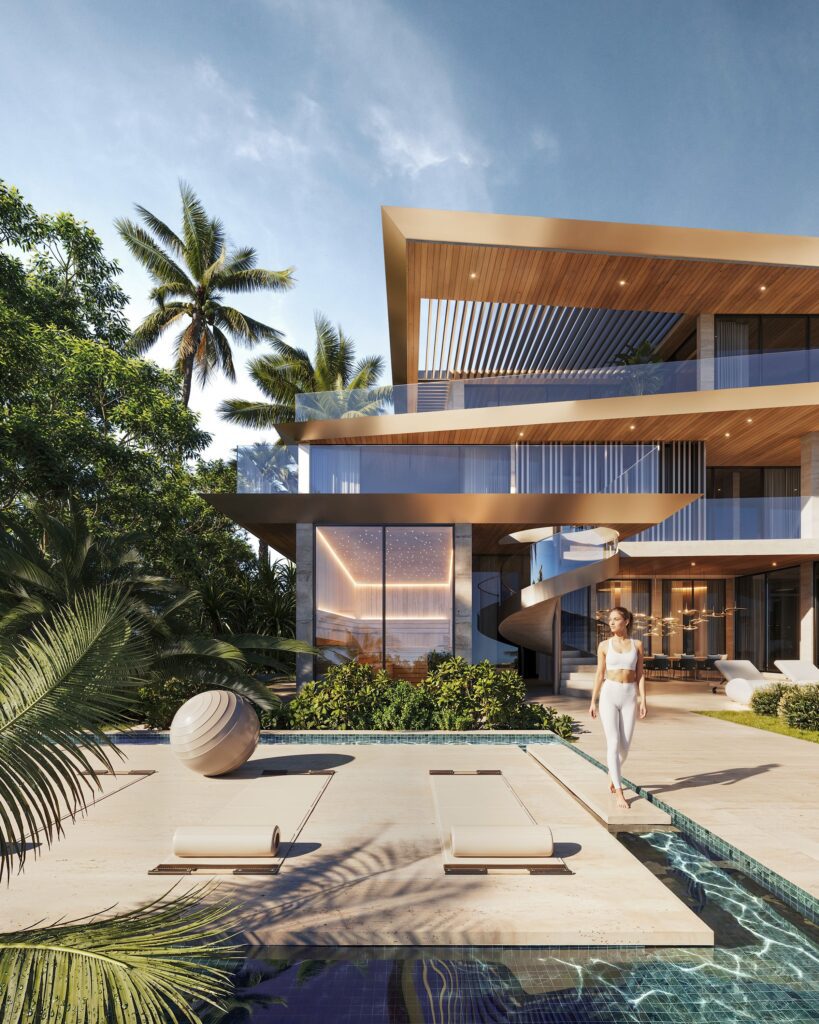 The third question is whether the space provides a clear point of focus.
In natural environments, attention is guided effortlessly. A view, a change in light, or a variation in texture draws the eye without requiring conscious effort. In many built environments, this is less considered. Spaces may lack a clear focal point, or they may contain multiple competing elements.
Attraction in architecture is not about creating a single dominant feature. It is about establishing a hierarchy that allows the eye to settle. This might be a framed view, a central piece of furniture, or a subtle alignment within the space.
In villa design across the UAE, particularly in waterfront or golf course settings, this often involves orienting spaces towards external views. However, the internal composition must support this. Without careful planning, views can become secondary to internal distractions.
Lighting plays a key role here. Layered lighting can emphasise certain areas while allowing others to recede. Smart home automation enhances this by adjusting lighting levels throughout the day, ensuring that focal points remain clear without becoming overly pronounced.
As Margaret Pluta has reflected, attraction is often strongest when it feels natural rather than imposed. In landscape architecture, this is achieved through the placement of planting, water or pathways. In architecture, it requires a similar level of restraint and intention.
Architecture project management in Dubai ensures that these focal relationships are maintained during construction. Small shifts in alignment or proportion can significantly affect how a space is perceived, making precision essential.
The third question is whether the space provides a clear point of focus.
In natural environments, attention is guided effortlessly. A view, a change in light, or a variation in texture draws the eye without requiring conscious effort. In many built environments, this is less considered. Spaces may lack a clear focal point, or they may contain multiple competing elements.
Attraction in architecture is not about creating a single dominant feature. It is about establishing a hierarchy that allows the eye to settle. This might be a framed view, a central piece of furniture, or a subtle alignment within the space.
In villa design across the UAE, particularly in waterfront or golf course settings, this often involves orienting spaces towards external views. However, the internal composition must support this. Without careful planning, views can become secondary to internal distractions.
Lighting plays a key role here. Layered lighting can emphasise certain areas while allowing others to recede. Smart home automation enhances this by adjusting lighting levels throughout the day, ensuring that focal points remain clear without becoming overly pronounced.
As Margaret Pluta has reflected, attraction is often strongest when it feels natural rather than imposed. In landscape architecture, this is achieved through the placement of planting, water or pathways. In architecture, it requires a similar level of restraint and intention.
Architecture project management in Dubai ensures that these focal relationships are maintained during construction. Small shifts in alignment or proportion can significantly affect how a space is perceived, making precision essential.
Alignment, Designing for What Actually Happens
The final question is perhaps the most important. Does the space align with how it is actually used? It is not uncommon for spaces to be designed around an idealised version of life. Large formal areas that are rarely occupied, or layouts that prioritise visual symmetry over practical use. While these may photograph well, they often do not support everyday behaviour. Alignment requires a deeper understanding of how people live. Where they spend time, how they move, and how different activities overlap. In luxury villa design, this means considering not only the primary functions of a space, but also how it adapts over time. Long term luxury villa design in Dubai increasingly reflects this thinking. Spaces are designed to accommodate variation, allowing for different modes of use without requiring physical change. This might involve flexible layouts, layered privacy or the integration of indoor and outdoor living. Smart home automation supports this by allowing environments to adjust in response to behaviour. Lighting, temperature and shading can adapt throughout the day, reinforcing the intended use of each space. However, these systems are most effective when they are built on a strong architectural foundation. Interior design companies in Dubai are working more closely with architects to ensure that alignment is embedded from the outset. This integration allows material, layout and environmental systems to work together, rather than being applied separately. As Lee Nellis often notes, the success of a space is not defined by how closely it follows a design concept, but by how naturally it supports the people who use it. Architecture should not impose behaviour. It should reflect it. When these four questions are considered together, context, richness, attraction and alignment, they provide a clear framework for evaluating any space. Not in abstract terms, but in relation to how it is experienced. In this sense, good design is not subjective. It is measurable through how well it supports human behaviour. The most successful homes are not those that attempt to impress, but those that feel immediately right, without needing to explain why.July 9, 2026
Systems Thinking in Architecture: Designing Systems, Not Just Villas
July 7, 2026
UAE Architecture During Global Uncertainty: How Dubai’s Architecture Sector Continues to Grow Through Global Change
July 6, 2026
Architecture and Identity in the UAE | Contemporary Middle Eastern Design | Nellis Architecture
July 5, 2026
Contemporary Luxury Architecture: What the World’s Best Residential Homes Have in Common
July 2, 2026
Dubai as a Global Design Base | Luxury Architect Dubai | Nellis Architecture
June 28, 2026
Smart Home Automation Dubai | What Belongs in a Luxury Villa | Nellis Architecture
June 3, 2026
Designing for Balance, What Traditional Chinese Architecture Teaches Modern UAE Homes
May 31, 2026
Behaviour-Led Luxury Home Design Dubai | Residential Architecture UAE | Nellis Architecture
May 30, 2026
Mediterranean-Inspired Luxury Home Design Dubai | Residential Architecture UAE | Nellis Architecture
May 25, 2026
When Design Is Tested What Actually Matters | Luxury Villa Design Dubai | Nellis Architecture
May 18, 2026
Beyond Aesthetics: Designing Spaces That Last | Luxury Home Design Dubai | Nellis Architecture
May 15, 2026
Architectural Design Across the UAE | Luxury Home Design Dubai | Nellis Architecture
May 8, 2026
How We Approach Dubai Villa Interior Design on Palm Jumeirah | Nellis Architecture
May 6, 2026
How to Choose an Architecture Firm in Dubai | Luxury Villa Design UAE | Nellis Architecture
April 6, 2026
Why Longevity Is Becoming the New Definition of Luxury
April 4, 2026
The Islamic Garden Principles in Contemporary Palm Jumeirah Villa Design
April 2, 2026
The Difference Between Expensive and Valuable in Luxury Architecture
March 30, 2026
The Architecture of Shade in the UAE
March 27, 2026
Living With the Sea: What Coastal Architecture Really Requires on Palm Jumeirah
March 24, 2026
From Mashrabiya to Modern Screens: Privacy in Architecture and What It Means for Dubai Villas Today
February 15, 2026
What Makes a Palm Villa Truly Luxury | Luxury Villa Design Dubai | Nellis Architecture
February 14, 2026
Modern vs Contemporary Villas on the Palm | Luxury Villa Design Dubai | Nellis Architecture
February 13, 2026
How to Maximise Views Without Sacrificing Privacy | Luxury Villa Design Dubai | Nellis Architecture
February 3, 2026
Future-Proofing a Palm Jumeirah Home | Luxury Villa Design Dubai | Nellis Architecture
January 25, 2026
Common Mistakes When Building High-End Homes in Dubai | Luxury Villa Design | Nellis Architecture
December 29, 2025
Indoor–Outdoor Living in the Gulf | Climate, Shading and Landscape | Nellis Architecture
December 24, 2025
Designing Stillness on the Sea | 5-Star Single Residence Winner | Nellis Architecture
December 24, 2025
Designing the Extraordinary: Onyx and the Architecture of Confidence
December 22, 2025
25 Questions: The Art of a Good Architectural Brief | Nellis Architecture
December 18, 2025
Water as Experience | Pools, Rills and Thermal Comfort in Gulf Architecture | Nellis Architecture
December 17, 2025
Nellis Architecture 2025 Reflections: Culture, Clarity and the Year of Momentum
December 15, 2025
The Craft of Time: Why Enduring Architecture Matters
November 25, 2025
Sustainable Architecture for Dubai Homes
November 24, 2025
Miraia, Award-Winning 5-Star Single Residence | International Property Awards 2025
November 21, 2025
Heritage and Innovation in Dubai Architecture: How Tradition Meets Modern Design
November 07, 2025
Beachfront Resilience: Salt, Wind, And Glazing
November 01, 2025
AI In Home Design: Useful Or Hype?
September 30, 2025
Quiet Luxury and the Secret of Wabi-Sabi
September 24, 2025
Bespoke Design for Dubai Homes
August 15, 2025
Full Circle Moments and Firsts: A Conversation with Anastasia, Intern at Nellis Architecture
August 11, 2025
Seeing Beyond the Surface: My Journey in Architectural Visualisation
July 22, 2025
When the Brief Comes Pre-Built. A studio reflection with Pieter, Ben and Quinton | Nellis Architecture
July 9, 2025
Introducing Margaret – and Why Landscape Architecture Isn’t Just “Nice to Have”
July 1, 2025
Living Tomorrow: Reflections on the Future of Home Design
June 3, 2025
Building Trust Not Just Buildings: Marketing the Nellis Way
April 14, 2025
How the World Got Smaller: Architecture, Tech, and Keeping Design Real
May 1, 2025
Crafting Light, Telling Stories: A Reflection on Milan Design Week 2025
March 19, 2025
Using Historical Learnings Today
February 2, 2025
Visiting Vitrocsa in Switzerland: Nellis Architecture x GLASSLINE
January 31, 2025
Crafting Wellness at Nellis Architecture: A Year of Reflection and Growth
December 20, 2024
Nellis Architecture X Bauhaus: The Power of Collaboration in Property Projects
December 6, 2024
Lee Nellis: A Journey Through Architecture
November 6, 2024