



Home / News
Architectural Design Across the UAE | Luxury Home Design Dubai | Nellis Architecture
May 15, 2026
The UAE is often approached as a single architectural market. In practice, it behaves as a collection of distinct environments, each shaped by its own planning frameworks, lifestyle patterns and expectations around living. Across Dubai, Abu Dhabi, Ras Al Khaimah, Sharjah and the wider Emirates, the differences are not simply visual. They influence how homes are planned, how materials are selected and how people move through space. What works in one emirate does not translate directly to another. This becomes particularly clear in luxury residential architecture. A villa designed for Palm Jumeirah will not perform in the same way on Saadiyat Island. A home conceived for Emirates Hills will feel out of place in Ras Al Khaimah or Fujairah. These are not stylistic differences. They are contextual ones. Among architecture firms in Dubai working across the UAE, this understanding is becoming essential. The question is no longer how to apply a consistent design language, but how architecture should respond to each place. As Lee Nellis often reflects, architecture in the UAE is not defined by a single identity. It is defined by how precisely it adapts to context.
Dubai, Precision and Liveability
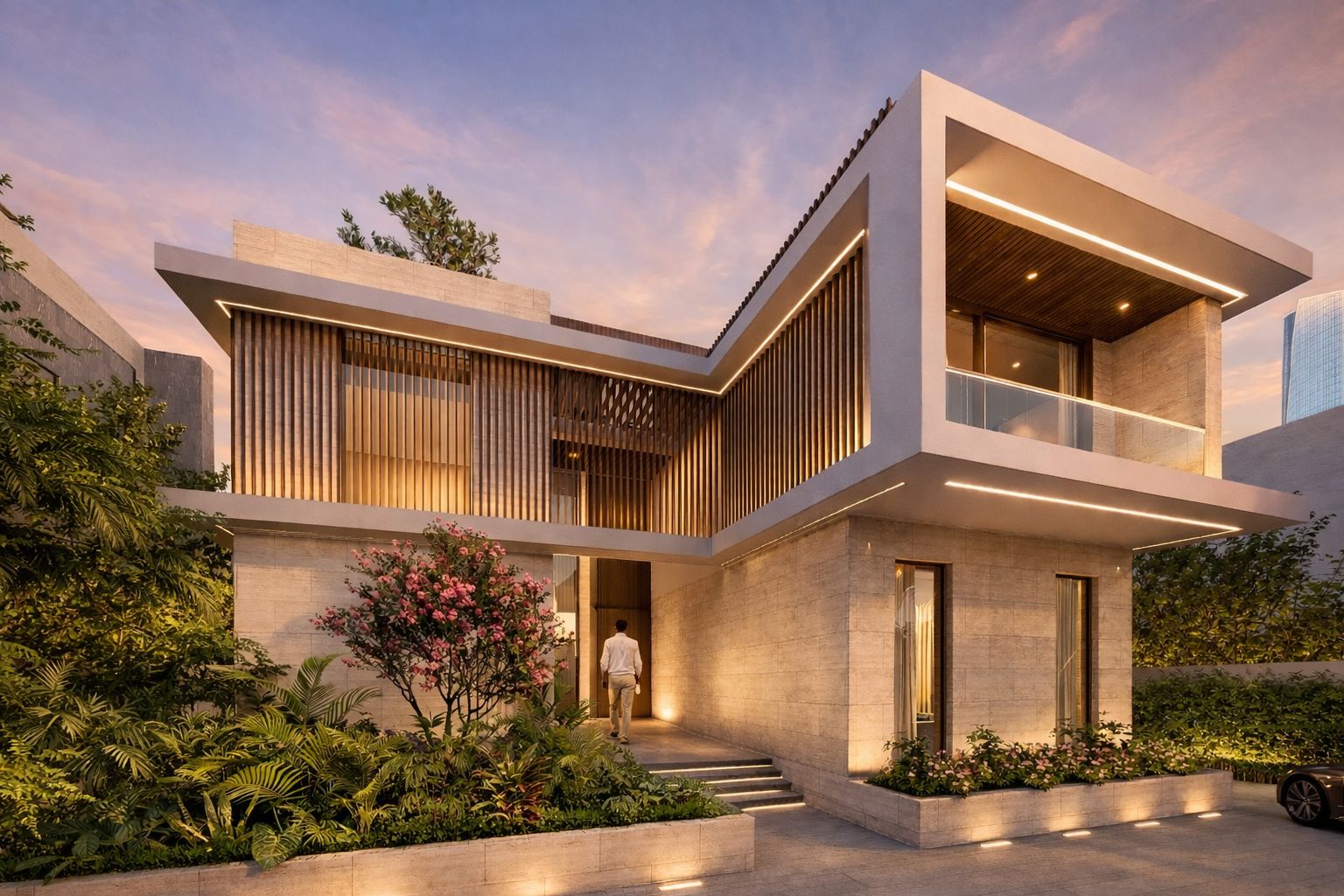
Dubai has established a residential design language that is international, highly resolved and visually immediate. In communities such as Emirates Hills, Dubai Hills Estate and Palm Jumeirah, architecture is expected to perform from the moment it is completed. There is a strong emphasis on proportion, alignment and finish. Materials are refined, details are controlled and the overall composition aligns with global architectural standards. This creates a consistent visual clarity across many of Dubai’s premium developments. However, the challenge lies in maintaining liveability behind that precision. Spaces designed primarily for visual impact can become less adaptable over time if behaviour is not fully considered. In luxury villa design in Dubai, architectural design services must balance presentation with performance, ensuring that homes not only resolve cleanly, but continue to function naturally in daily life. Smart home automation supports this by allowing subtle environmental adjustments, but the architecture itself must carry the primary responsibility.Abu Dhabi, Scale, Culture and Longevity
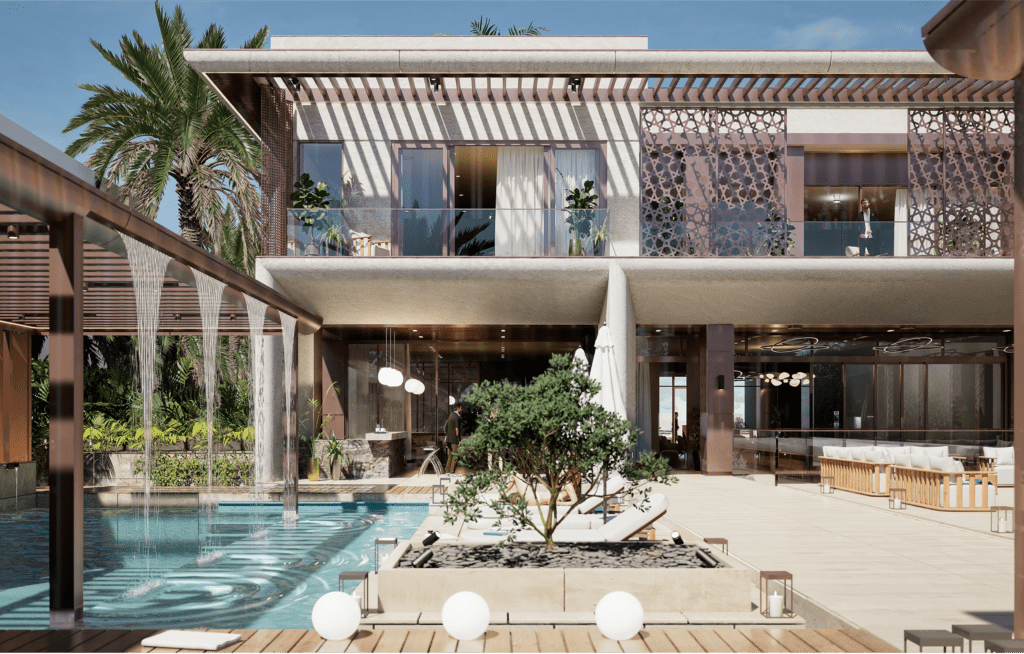 In Abu Dhabi, the architectural approach is shaped by a different set of priorities. Developments such as Saadiyat Island, Yas Island and Al Jubail Island reflect a close relationship between architecture, landscape and cultural context, where the built environment is expected to integrate gradually rather than assert itself immediately.
The emphasis here is on how buildings perform and age over time. Material selection and spatial organisation are guided by continuity, with design decisions informed by climate, culture and long-term usability. Sustainable architecture in Abu Dhabi reinforces this, embedding passive strategies and environmental response directly into the structure of the building.
This is not a contrasting philosophy to Dubai's, but a parallel one. Where Dubai's residential design language is precise and visually immediate, Abu Dhabi's tends toward permanence and contextual depth. Both reflect the demands of their respective communities and both represent a sophisticated response to luxury living in the region. As Quinton Murdoch often notes, longevity is not achieved through scale or complexity. It is achieved through decisions that allow a building to remain stable and coherent over time - a principle that applies equally across both emirates.
In Abu Dhabi, the architectural approach is shaped by a different set of priorities. Developments such as Saadiyat Island, Yas Island and Al Jubail Island reflect a close relationship between architecture, landscape and cultural context, where the built environment is expected to integrate gradually rather than assert itself immediately.
The emphasis here is on how buildings perform and age over time. Material selection and spatial organisation are guided by continuity, with design decisions informed by climate, culture and long-term usability. Sustainable architecture in Abu Dhabi reinforces this, embedding passive strategies and environmental response directly into the structure of the building.
This is not a contrasting philosophy to Dubai's, but a parallel one. Where Dubai's residential design language is precise and visually immediate, Abu Dhabi's tends toward permanence and contextual depth. Both reflect the demands of their respective communities and both represent a sophisticated response to luxury living in the region. As Quinton Murdoch often notes, longevity is not achieved through scale or complexity. It is achieved through decisions that allow a building to remain stable and coherent over time - a principle that applies equally across both emirates.
Ras Al Khaimah and the Northern Emirates, Landscape and Experience
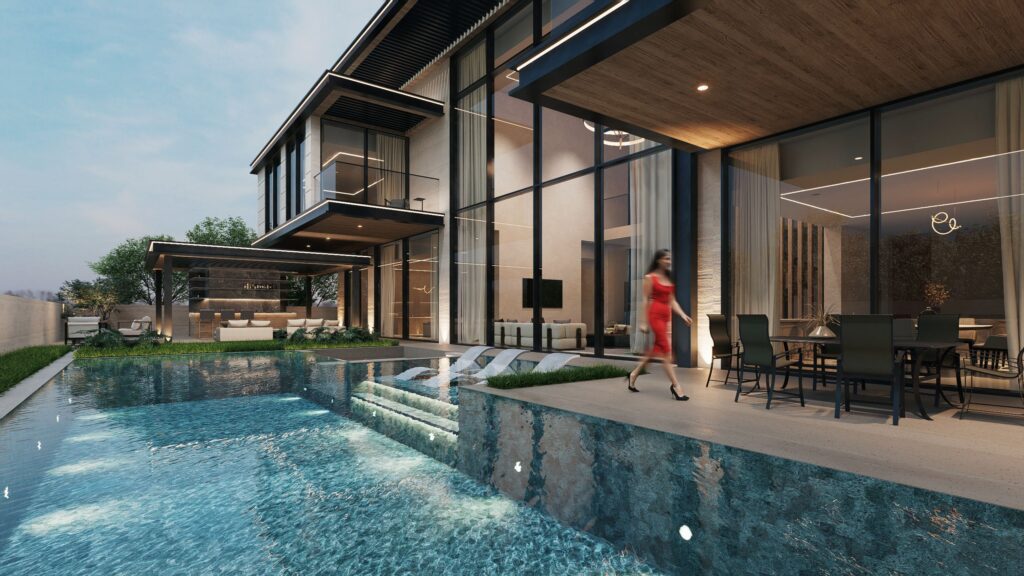 In Ras Al Khaimah, along with parts of Umm Al Quwain and Fujairah, architecture is increasingly shaped by landscape and experience rather than definition.
Locations such as Al Hamra Village, Mina Al Arab and Al Marjan Island reflect a more relaxed, experience-led approach to residential design. Here, the relationship between the home and its surroundings becomes central. Architecture opens towards views, responds to coastline and terrain, and integrates more directly with its environment. The emphasis is on creating spaces that feel connected rather than controlled.
Across the Northern Emirates, this approach extends further. In Fujairah, the presence of mountains and coastline introduces a different set of spatial and environmental conditions. In Umm Al Quwain, lower-density development allows for a more open relationship between built form and landscape. As Margaret Pluta has observed, architecture in these contexts works best when it does not compete with its surroundings. It should support and extend them.
In Ras Al Khaimah, along with parts of Umm Al Quwain and Fujairah, architecture is increasingly shaped by landscape and experience rather than definition.
Locations such as Al Hamra Village, Mina Al Arab and Al Marjan Island reflect a more relaxed, experience-led approach to residential design. Here, the relationship between the home and its surroundings becomes central. Architecture opens towards views, responds to coastline and terrain, and integrates more directly with its environment. The emphasis is on creating spaces that feel connected rather than controlled.
Across the Northern Emirates, this approach extends further. In Fujairah, the presence of mountains and coastline introduces a different set of spatial and environmental conditions. In Umm Al Quwain, lower-density development allows for a more open relationship between built form and landscape. As Margaret Pluta has observed, architecture in these contexts works best when it does not compete with its surroundings. It should support and extend them.
Sharjah, Structure, Community and Cultural Alignment
Sharjah introduces another dimension. Developments such as Sharjah Sustainable City, Tilal City and Aljada reflect a more structured and community-focused approach. Here, architecture is shaped by regulation, cultural expectations and family-oriented living patterns. The result is a more restrained architectural language, but one that is often more functionally grounded. This approach extends across the emirate, where planning frameworks and sustainability requirements influence how homes are designed. Circulation is clear, spaces are defined and the relationship between private and shared areas is carefully managed. In this context, architectural design services must respond not only to site conditions, but to a broader framework of requirements. This includes sustainability targets, regulatory alignment and cultural considerations. The result is architecture that may appear more controlled, but often performs consistently because it is aligned with how it will be used.Designing Across a Country of Differences
The UAE is not defined by a single architectural identity. It is defined by variation.
Each emirate presents a different combination of climate, planning, culture and lifestyle. Designing successfully across the UAE requires an understanding of how these factors shape the way people live. This is not about applying a consistent style. It is about recognising where architecture needs to shift. Proportion, material, spatial organisation and environmental response all adapt depending on context.
Long term luxury home design in Dubai and across the UAE increasingly reflects this approach. Homes are designed as responses to place, rather than as repeatable solutions. Architecture project management in Dubai and across the Emirates ensures that these responses are delivered accurately, maintaining alignment between design intent and built outcome. As Lee Nellis often reflects, architecture begins with understanding. Not of form, but of place.
The UAE does not require a single architectural language. It requires the ability to recognise difference, and to design with it. That is where architecture becomes specific. And that is where it begins to feel right.
Design Intent Summary
This article positions the UAE as a collection of distinct architectural contexts, reinforcing Nellis Architecture’s approach to designing homes that respond to each emirate’s environmental, cultural and behavioural conditions rather than applying a uniform design language.How Dubai Climate Shapes Every Decision a Luxury Architect Makes
Aug 14, 2026
Why International Clients Continue to Choose Dubai for Bespoke Residential Architecture
Aug 11, 2026
Can Architecture Make a Luxury Brand More Desirable? The Psychology Behind Premium Retail Design
July 30, 2026
Designing Oceanfront Homes That Feel Private Without Closing Off the View
July 28, 2026
Contemporary Luxury Architecture: What the World’s Best Homes Have in Common
July 9, 2026
Systems Thinking in Architecture: Designing Systems, Not Just Villas
July 7, 2026
UAE Architecture During Global Uncertainty: How Dubai’s Architecture Sector Continues to Grow Through Global Change
July 6, 2026
Architecture and Identity in the UAE | Contemporary Middle Eastern Design | Nellis Architecture
July 5, 2026
Contemporary Luxury Architecture: What the World’s Best Residential Homes Have in Common
July 2, 2026
Dubai as a Global Design Base | Luxury Architect Dubai | Nellis Architecture
June 28, 2026
Smart Home Automation Dubai | What Belongs in a Luxury Villa | Nellis Architecture
June 3, 2026
Designing for Balance, What Traditional Chinese Architecture Teaches Modern UAE Homes
May 31, 2026
Behaviour-Led Luxury Home Design Dubai | Residential Architecture UAE | Nellis Architecture
May 30, 2026
Mediterranean-Inspired Luxury Home Design Dubai | Residential Architecture UAE | Nellis Architecture
May 25, 2026
When Design Is Tested What Actually Matters | Luxury Villa Design Dubai | Nellis Architecture
May 18, 2026
Beyond Aesthetics: Designing Spaces That Last | Luxury Home Design Dubai | Nellis Architecture
May 15, 2026
Architectural Design Across the UAE | Luxury Home Design Dubai | Nellis Architecture
May 8, 2026
How We Approach Dubai Villa Interior Design on Palm Jumeirah | Nellis Architecture
May 6, 2026
How to Choose an Architecture Firm in Dubai | Luxury Villa Design UAE | Nellis Architecture
April 6, 2026
Why Longevity Is Becoming the New Definition of Luxury
April 4, 2026
The Islamic Garden Principles in Contemporary Palm Jumeirah Villa Design
April 2, 2026
The Difference Between Expensive and Valuable in Luxury Architecture
March 30, 2026
The Architecture of Shade in the UAE
March 27, 2026
Living With the Sea: What Coastal Architecture Really Requires on Palm Jumeirah
March 24, 2026
From Mashrabiya to Modern Screens: Privacy in Architecture and What It Means for Dubai Villas Today
February 15, 2026
What Makes a Palm Villa Truly Luxury | Luxury Villa Design Dubai | Nellis Architecture
February 14, 2026
Modern vs Contemporary Villas on the Palm | Luxury Villa Design Dubai | Nellis Architecture
February 13, 2026
How to Maximise Views Without Sacrificing Privacy | Luxury Villa Design Dubai | Nellis Architecture
February 3, 2026
Future-Proofing a Palm Jumeirah Home | Luxury Villa Design Dubai | Nellis Architecture
January 25, 2026
Common Mistakes When Building High-End Homes in Dubai | Luxury Villa Design | Nellis Architecture
December 29, 2025
Indoor–Outdoor Living in the Gulf | Climate, Shading and Landscape | Nellis Architecture
December 24, 2025
Designing Stillness on the Sea | 5-Star Single Residence Winner | Nellis Architecture
December 24, 2025
Designing the Extraordinary: Onyx and the Architecture of Confidence
December 22, 2025
25 Questions: The Art of a Good Architectural Brief | Nellis Architecture
December 18, 2025
Water as Experience | Pools, Rills and Thermal Comfort in Gulf Architecture | Nellis Architecture
December 17, 2025
Nellis Architecture 2025 Reflections: Culture, Clarity and the Year of Momentum
December 15, 2025
The Craft of Time: Why Enduring Architecture Matters
November 25, 2025
Sustainable Architecture for Dubai Homes
November 24, 2025
Miraia, Award-Winning 5-Star Single Residence | International Property Awards 2025
November 21, 2025
Heritage and Innovation in Dubai Architecture: How Tradition Meets Modern Design
November 07, 2025
Beachfront Resilience: Salt, Wind, And Glazing
November 01, 2025
AI In Home Design: Useful Or Hype?
September 30, 2025
Quiet Luxury and the Secret of Wabi-Sabi
September 24, 2025
Bespoke Design for Dubai Homes
August 15, 2025
Full Circle Moments and Firsts: A Conversation with Anastasia, Intern at Nellis Architecture
August 11, 2025
Seeing Beyond the Surface: My Journey in Architectural Visualisation
July 22, 2025
When the Brief Comes Pre-Built. A studio reflection with Pieter, Ben and Quinton | Nellis Architecture
July 9, 2025
Introducing Margaret – and Why Landscape Architecture Isn’t Just “Nice to Have”
July 1, 2025
Living Tomorrow: Reflections on the Future of Home Design
June 3, 2025
Building Trust Not Just Buildings: Marketing the Nellis Way
April 14, 2025
How the World Got Smaller: Architecture, Tech, and Keeping Design Real
May 1, 2025
Crafting Light, Telling Stories: A Reflection on Milan Design Week 2025
March 19, 2025
Using Historical Learnings Today
February 2, 2025
Visiting Vitrocsa in Switzerland: Nellis Architecture x GLASSLINE
January 31, 2025
Crafting Wellness at Nellis Architecture: A Year of Reflection and Growth
December 20, 2024
Nellis Architecture X Bauhaus: The Power of Collaboration in Property Projects
December 6, 2024
Lee Nellis: A Journey Through Architecture
November 6, 2024