



Home / News
Dubai as a Global Design Base | Luxury Architect Dubai | Nellis Architecture
July 2, 2026
There is a particular kind of client that Dubai has always attracted. Mobile, internationally experienced, with homes or professional roots across multiple cities and an eye calibrated by exposure to the world's most considered architecture. For this client, the choice to commission a home in Dubai is rarely impulsive. It is the result of a deliberate calculation about where quality of life, design ambition and long-term stability intersect most convincingly. What has shifted in recent years is the volume of that calculation arriving at the same conclusion. Dubai is not simply growing as a residential market. It is consolidating its position as the city from which globally minded people choose to build their most considered homes. The pipeline across architecture firms in Dubai reflects this - an increasing proportion of commissions coming from clients whose primary reference points are international, whose expectations are formed by the best residential architecture across multiple continents, and whose brief is shaped by a life lived across borders. Understanding why Dubai has reached this position - and what it requires from the practices operating here - is increasingly relevant for anyone engaged with international architecture UAE at a serious level. As Lee Nellis often reflects, Dubai does not ask you to lower your expectations. It asks whether you can meet them. That is a different kind of invitation entirely.
A City Engineered for Ambition
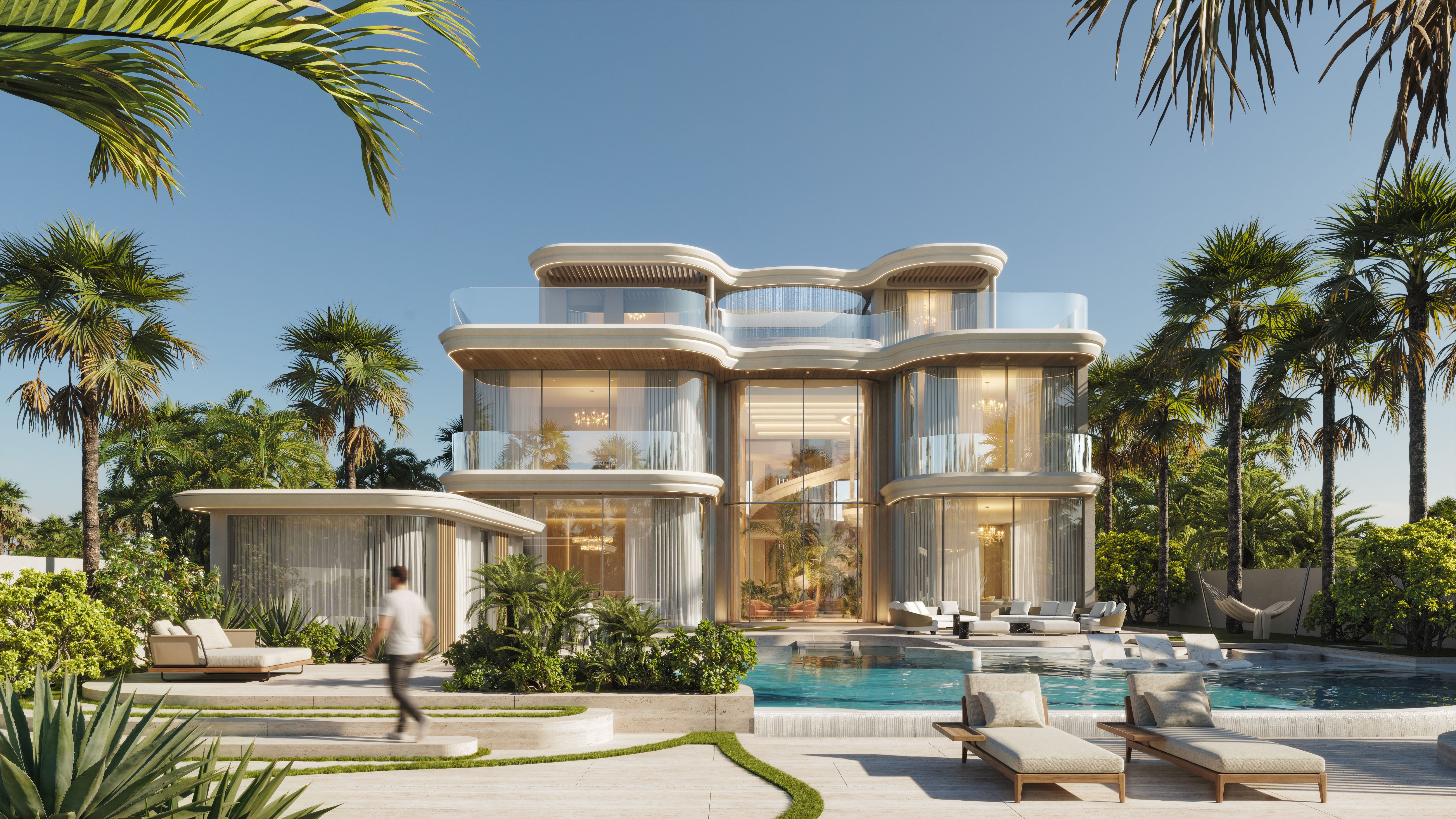 The conditions that make Dubai attractive to international clients are not accidental. They are the product of deliberate policy, sustained infrastructure investment and a planning environment that has consistently treated architectural ambition as an asset rather than a complication.
For those accustomed to the friction of building in older cities - planning delays, heritage constraints, fragmented regulatory frameworks - Dubai’s environment is genuinely distinct. Processes are clear. Timelines are navigable. The relationship between design intent and built outcome is not systematically interrupted by bureaucratic uncertainty.
This does not mean the environment is without rigour. Community-specific design guidelines, structural requirements and sustainability standards all apply with precision. But the rigour is directed toward quality of outcome rather than toward restriction for its own sake. For a luxury architect Dubai operating at the upper end of the residential market, this is a productive constraint rather than a limiting one.
The infrastructure surrounding that regulatory environment reinforces it. Aviation connectivity that places Dubai within eight hours of the majority of the world’s population. Logistics and supply chains capable of delivering specialist materials and systems from any source market. A construction industry with genuine depth of technical skill across a wide range of building types and finish standards.
Together, these conditions create an environment where serious architectural ambition can be realised without the attrition that diminishes it elsewhere.
The conditions that make Dubai attractive to international clients are not accidental. They are the product of deliberate policy, sustained infrastructure investment and a planning environment that has consistently treated architectural ambition as an asset rather than a complication.
For those accustomed to the friction of building in older cities - planning delays, heritage constraints, fragmented regulatory frameworks - Dubai’s environment is genuinely distinct. Processes are clear. Timelines are navigable. The relationship between design intent and built outcome is not systematically interrupted by bureaucratic uncertainty.
This does not mean the environment is without rigour. Community-specific design guidelines, structural requirements and sustainability standards all apply with precision. But the rigour is directed toward quality of outcome rather than toward restriction for its own sake. For a luxury architect Dubai operating at the upper end of the residential market, this is a productive constraint rather than a limiting one.
The infrastructure surrounding that regulatory environment reinforces it. Aviation connectivity that places Dubai within eight hours of the majority of the world’s population. Logistics and supply chains capable of delivering specialist materials and systems from any source market. A construction industry with genuine depth of technical skill across a wide range of building types and finish standards.
Together, these conditions create an environment where serious architectural ambition can be realised without the attrition that diminishes it elsewhere.
What International Clients Actually Require
International clients commissioning homes in Dubai bring a design literacy that is one of the most demanding - and productive - forces acting on the UAE architecture industry today. These are clients who have lived in well-designed homes in London, Geneva, Singapore or New York. They understand proportion. They notice when a material has been selected for its visual weight rather than its actual quality. They are sensitive to how a home performs across a day, across a season, across a decade of ownership. Their brief is not formed from a brochure. It is formed from experience. What this requires from Dubai architecture firms is a corresponding depth of design intelligence. The ability to engage with a brief that is simultaneously specific and sophisticated. The technical capacity to resolve a home to the standard the client’s experience will immediately register. The design rigour to produce spatial relationships, material selections and environmental responses that hold up not just on completion, but through years of daily life. International architecture UAE, at its most serious, is not about applying a global aesthetic to a local site. It is about bringing genuinely international design thinking - the spatial intelligence of Japanese architecture, the material honesty of Scandinavian practice, the compositional precision of the best European residential work - and grounding it precisely in the conditions of this place, this climate and this client. As Quinton Murdoch often notes, the most sophisticated clients do not want Dubai to imitate somewhere else. They want Dubai to be its best version of itself. That requires knowing what the best version looks like.The Geography of Trust
There is a dimension of Dubai’s appeal as a global design base that is less frequently articulated but consistently present in how international clients describe their decision to build here: trust in the environment itself. For clients whose wealth and professional lives span multiple jurisdictions, the ability to establish a permanent, high-quality residential base in a location that is predictable, legally clear and socially open carries weight that is difficult to quantify but easy to observe. Dubai is neutral in ways that matter. It does not carry the political volatility of some regional alternatives. It does not carry the regulatory uncertainty of markets undergoing structural transition. It offers the kind of ambient stability that allows a client to focus on the architecture rather than on the context surrounding it. This is what is meant when Dubai is described as a global design base rather than simply a growth market. A base implies permanence, intentionality and the kind of commitment that justifies the highest level of architectural investment. Clients who are building bases, not investments, commission differently. They ask different questions. They make different decisions about materials, spatial generosity and the long-term adaptability of the home. For a luxury architect Dubai, this shift in client intention is among the most significant forces shaping the residential market today. It raises the standard of what is required and rewards the practices equipped to meet it.Design Diversity as a Competitive Advantage
One of the less visible but genuinely significant characteristics of Dubai’s architectural environment is the diversity of design reference that now operates within it. Dubai architecture firms at the serious end of the residential market draw on talent from across Europe, South Asia, East Africa, the Levant and East Asia. This is not a demographic observation. It is a design observation. Diverse architectural backgrounds produce diverse ways of seeing space, material and light. The practice that has resolved a home in the Swiss Alps, designed a courtyard residence in Beirut and delivered a waterfront villa on Palm Jumeirah brings a different quality of spatial thinking to a new brief than one formed entirely within a single national tradition. For international clients whose own design expectations are formed by exposure across multiple architectural cultures, this diversity is not incidental. It is part of what they are commissioning. They are not simply buying a building. They are engaging with a practice whose design intelligence is broad enough to translate their internationally formed brief into something that belongs completely to its location in Dubai. International architecture UAE, when it is working well, looks nothing like an import. It looks like the best possible response to a specific place, formed by people who understand both that place and the wider world it connects to. As Ashley Bothma has observed, the most interesting architecture is produced where different ways of seeing are in genuine conversation. Dubai, by its nature, provides that conversation constantly.Building Here, Building Well
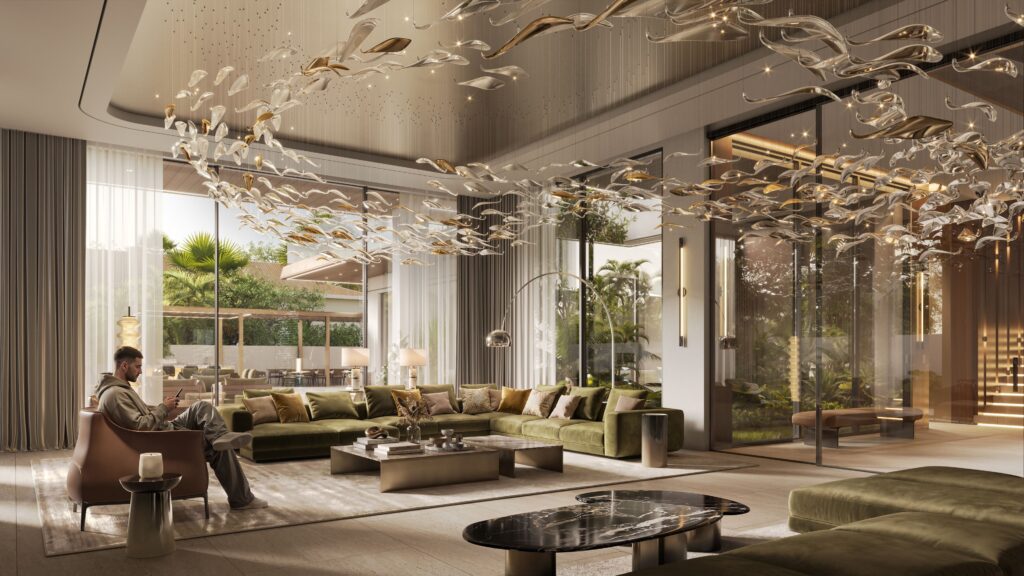 The question that matters most for those considering commissioning a home in Dubai is not whether the city can support architectural ambition. That is now evident. The question is how to ensure that the ambition is met with the quality of practice it deserves.
The UAE architecture industry has grown rapidly. Not all of that growth has been uniform in quality. Practices operating at volume produce different work from those operating at depth. The difference is visible not in the marketing but in the architecture - in the resolution of details, the coherence of spatial sequence, the quality of how materials have been selected and assembled over time.
For international clients building from Dubai, the discipline of choosing a practice that matches the seriousness of the brief is as important as any other decision in the process. A home of this scale, commissioned at this level of investment, requires a practice that has thought carefully about what it means to build well in this place - not one that simply operates here.
Dubai’s position as a global design base is not a given. It is actively produced by the quality of what gets built within it. The practices that contribute most to that position are those for whom that responsibility is not a claim but a discipline.
As Lee Nellis often reflects, Dubai earns its reputation as a place worth building in one home at a time. Each commission is either an argument for that reputation or a complication of it. There is no neutral position.
The question that matters most for those considering commissioning a home in Dubai is not whether the city can support architectural ambition. That is now evident. The question is how to ensure that the ambition is met with the quality of practice it deserves.
The UAE architecture industry has grown rapidly. Not all of that growth has been uniform in quality. Practices operating at volume produce different work from those operating at depth. The difference is visible not in the marketing but in the architecture - in the resolution of details, the coherence of spatial sequence, the quality of how materials have been selected and assembled over time.
For international clients building from Dubai, the discipline of choosing a practice that matches the seriousness of the brief is as important as any other decision in the process. A home of this scale, commissioned at this level of investment, requires a practice that has thought carefully about what it means to build well in this place - not one that simply operates here.
Dubai’s position as a global design base is not a given. It is actively produced by the quality of what gets built within it. The practices that contribute most to that position are those for whom that responsibility is not a claim but a discipline.
As Lee Nellis often reflects, Dubai earns its reputation as a place worth building in one home at a time. Each commission is either an argument for that reputation or a complication of it. There is no neutral position.
Design Intent Summary
This article speaks directly to the internationally mobile client considering Dubai as a primary residential base, positioning Nellis Architecture as a practice that understands both the global frame of reference such clients bring and the specific demands of building in Dubai with genuine quality. It reinforces the firm’s credibility with an audience whose expectations are formed by the best residential architecture worldwide and whose decision to build here is a considered one.July 2, 2026
Dubai as a Global Design Base | Luxury Architect Dubai | Nellis Architecture
June 28, 2026
Smart Home Automation Dubai | What Belongs in a Luxury Villa | Nellis Architecture
June 3, 2026
Designing for Balance, What Traditional Chinese Architecture Teaches Modern UAE Homes
May 31, 2026
Behaviour-Led Luxury Home Design Dubai | Residential Architecture UAE | Nellis Architecture
May 30, 2026
Mediterranean-Inspired Luxury Home Design Dubai | Residential Architecture UAE | Nellis Architecture
May 25, 2026
When Design Is Tested What Actually Matters | Luxury Villa Design Dubai | Nellis Architecture
May 18, 2026
Beyond Aesthetics: Designing Spaces That Last | Luxury Home Design Dubai | Nellis Architecture
May 15, 2026
Architectural Design Across the UAE | Luxury Home Design Dubai | Nellis Architecture
May 8, 2026
How We Approach Dubai Villa Interior Design on Palm Jumeirah | Nellis Architecture
May 6, 2026
How to Choose an Architecture Firm in Dubai | Luxury Villa Design UAE | Nellis Architecture
April 6, 2026
Why Longevity Is Becoming the New Definition of Luxury
April 4, 2026
The Islamic Garden Principles in Contemporary Palm Jumeirah Villa Design
April 2, 2026
The Difference Between Expensive and Valuable in Luxury Architecture
March 30, 2026
The Architecture of Shade in the UAE
March 27, 2026
Living With the Sea: What Coastal Architecture Really Requires on Palm Jumeirah
March 24, 2026
From Mashrabiya to Modern Screens: Privacy in Architecture and What It Means for Dubai Villas Today
February 15, 2026
What Makes a Palm Villa Truly Luxury | Luxury Villa Design Dubai | Nellis Architecture
February 14, 2026
Modern vs Contemporary Villas on the Palm | Luxury Villa Design Dubai | Nellis Architecture
February 13, 2026
How to Maximise Views Without Sacrificing Privacy | Luxury Villa Design Dubai | Nellis Architecture
February 3, 2026
Future-Proofing a Palm Jumeirah Home | Luxury Villa Design Dubai | Nellis Architecture
January 25, 2026
Common Mistakes When Building High-End Homes in Dubai | Luxury Villa Design | Nellis Architecture
December 29, 2025
Indoor–Outdoor Living in the Gulf | Climate, Shading and Landscape | Nellis Architecture
December 24, 2025
Designing Stillness on the Sea | 5-Star Single Residence Winner | Nellis Architecture
December 24, 2025
Designing the Extraordinary: Onyx and the Architecture of Confidence
December 22, 2025
25 Questions: The Art of a Good Architectural Brief | Nellis Architecture
December 18, 2025
Water as Experience | Pools, Rills and Thermal Comfort in Gulf Architecture | Nellis Architecture
December 17, 2025
Nellis Architecture 2025 Reflections: Culture, Clarity and the Year of Momentum
December 15, 2025
The Craft of Time: Why Enduring Architecture Matters
November 25, 2025
Sustainable Architecture for Dubai Homes
November 24, 2025
Miraia, Award-Winning 5-Star Single Residence | International Property Awards 2025
November 21, 2025
Heritage and Innovation in Dubai Architecture: How Tradition Meets Modern Design
November 07, 2025
Beachfront Resilience: Salt, Wind, And Glazing
November 01, 2025
AI In Home Design: Useful Or Hype?
September 30, 2025
Quiet Luxury and the Secret of Wabi-Sabi
September 24, 2025
Bespoke Design for Dubai Homes
August 15, 2025
Full Circle Moments and Firsts: A Conversation with Anastasia, Intern at Nellis Architecture
August 11, 2025
Seeing Beyond the Surface: My Journey in Architectural Visualisation
July 22, 2025
When the Brief Comes Pre-Built. A studio reflection with Pieter, Ben and Quinton | Nellis Architecture
July 9, 2025
Introducing Margaret – and Why Landscape Architecture Isn’t Just “Nice to Have”
July 1, 2025
Living Tomorrow: Reflections on the Future of Home Design
June 3, 2025
Building Trust Not Just Buildings: Marketing the Nellis Way
April 14, 2025
How the World Got Smaller: Architecture, Tech, and Keeping Design Real
May 1, 2025
Crafting Light, Telling Stories: A Reflection on Milan Design Week 2025
March 19, 2025
Using Historical Learnings Today
February 2, 2025
Visiting Vitrocsa in Switzerland: Nellis Architecture x GLASSLINE
January 31, 2025
Crafting Wellness at Nellis Architecture: A Year of Reflection and Growth
December 20, 2024
Nellis Architecture X Bauhaus: The Power of Collaboration in Property Projects
December 6, 2024
Lee Nellis: A Journey Through Architecture
November 6, 2024