



Home / News
How We Approach Dubai Villa Interior Design on Palm Jumeirah | Nellis Architecture
May 8, 2026
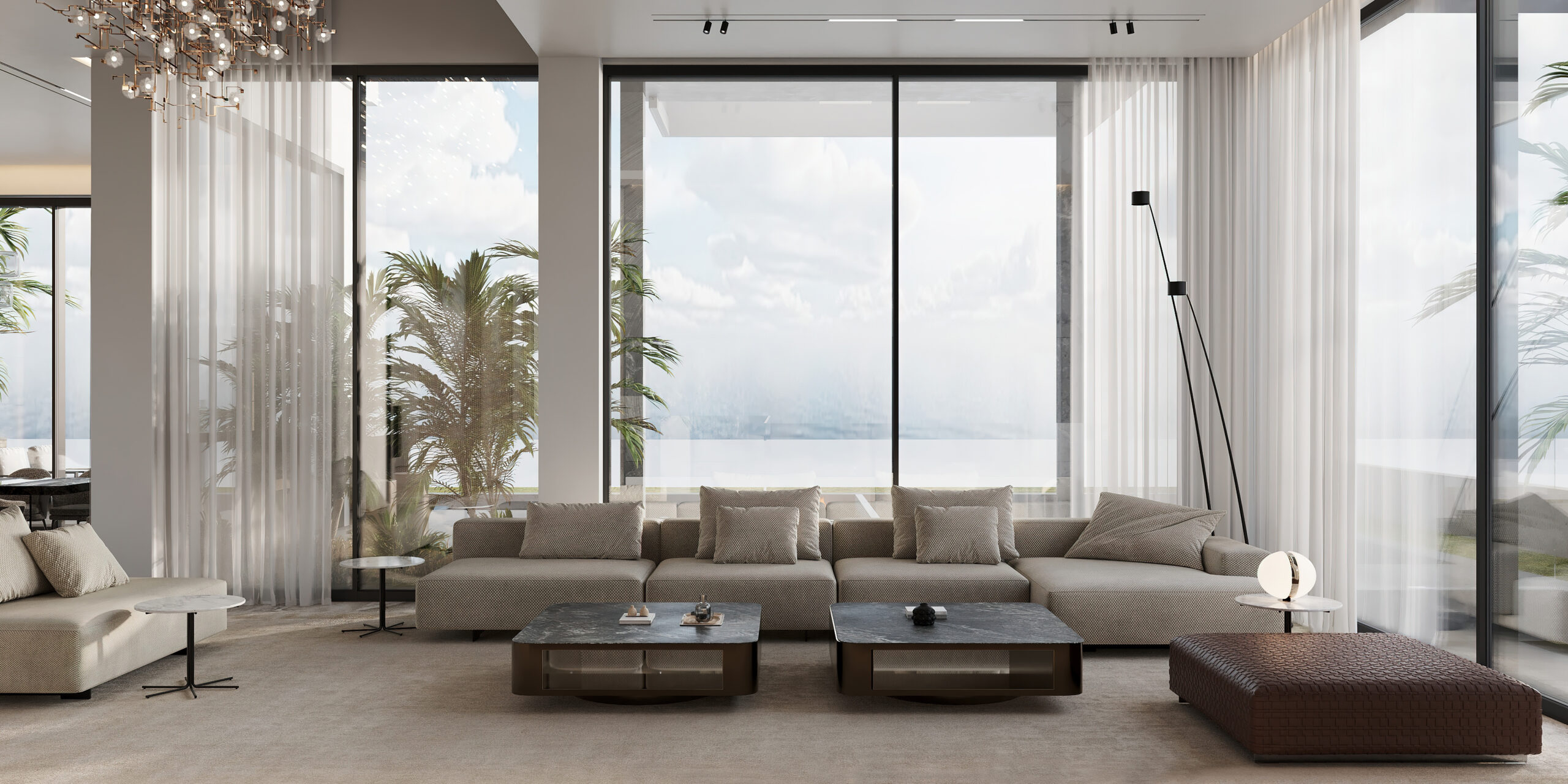
Dubai villa interior design does not begin when the shell is complete. It begins much earlier, with how a family moves through a home, how they gather, how they want to feel at the end of a long day. On Palm Jumeirah, this becomes even more critical. Interior design is not a layer applied to architecture. It is inseparable from it. Across Palm Jumeirah, expectations are consistently high. The setting is defined by water, light and openness. Views appear unexpectedly, light reflects back into spaces, and the relationship between inside and outside is constant. These are not neutral conditions. They shape every decision. Among Dubai architects and architecture firms in Dubai, what separates one project from another is not scale or finish, but how well these conditions are understood and translated into lived experience. As Lee Nellis often reflects, people do not describe what they need in technical terms. They describe how they want to feel. Comfortable, calm, connected. The role of architecture is to translate those instincts into spaces that respond consistently, not occasionally.
The Interior Begins at the Site
Before any interior decisions are made, we begin with the site. On Palm Jumeirah, orientation defines everything. A plot facing Dubai Marina behaves differently to one facing open water or the quieter fronds. Light arrives at different angles throughout the day. Heat builds in specific areas. Views shift depending on level and position. Dubai villa interior design that ignores this produces spaces that feel inconsistent, comfortable at one time of day and difficult at another. We map how light moves across the building from morning through to evening, and across seasons. That understanding informs where living spaces sit, how openings are positioned, and how materials respond to the environment. This creates a direct relationship between the interior and its surroundings. As we often observe, a room should be aware of where it is. What it sees, how light enters, how the environment shapes its atmosphere. When this is considered early, the interior becomes an extension of the landscape rather than something separate from it.Structure and Interior as a Single Decision
A common issue in Palm Jumeirah villa design is the separation of structure and interior intent. When the structural system is fixed before the interior is properly considered, compromises follow. Columns interrupt spaces, ceiling heights are restricted, and layouts become less fluid than intended. We approach these decisions together. Structure and interior develop at the same time. This allows us to push columns to the perimeter, create volumes where they are needed, and design spatial sequences that feel intentional rather than imposed. This is not simply a design preference. It directly affects how a space is experienced. As Quinton Murdoch often notes, clarity in construction begins with clarity in design. When structure supports the interior from the outset, the result is a space that feels coherent rather than adjusted. At this level, Dubai villa interior design requires genuine integration. When architecture and interiors are disconnected, even the most capable interior design companies in Dubai are working within limitations that cannot be fully resolved later.Material Intelligence in a Coastal Environment
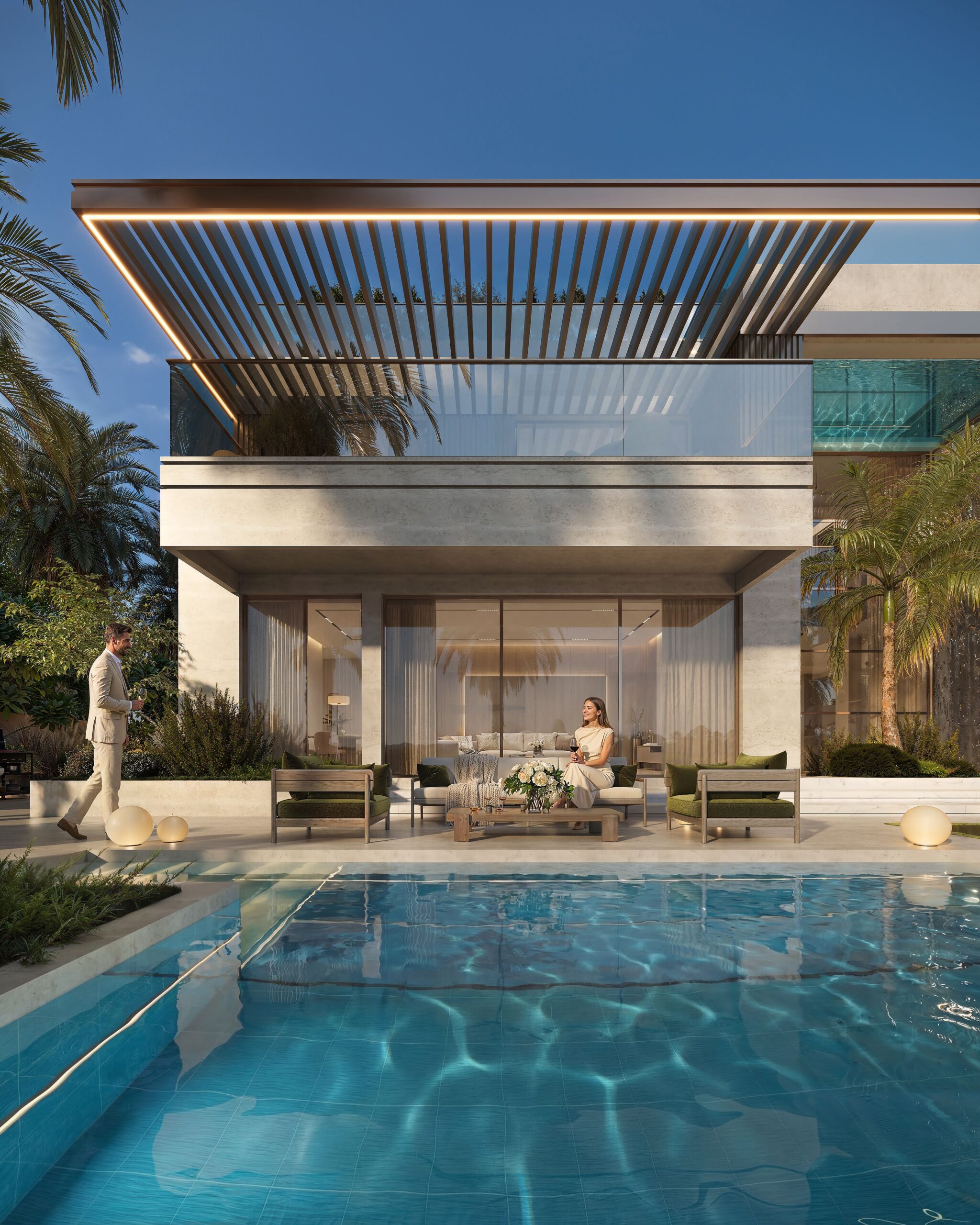 Palm Jumeirah is a coastal environment, and this has a direct impact on material performance. Salt air, humidity and solar exposure affect finishes in ways that are often underestimated. Materials that perform well in other regions may behave very differently here.
Our approach places material intelligence at the centre of the design process. This is not a restriction, it is what allows the interior to remain stable over time. Stone, timber and metal are selected not only for their visual quality, but for how they respond to the climate.
A material that ages well contributes to the overall experience of the home. One that deteriorates introduces disruption. As we have seen across projects in the region, early decisions around materials often determine whether a home continues to perform as intended years after completion.
Sustainable architecture in Dubai reinforces this thinking. Materials that work with the climate, rather than against it, create spaces that feel more consistent. They reduce the need for constant adjustment and contribute to long-term comfort.
Palm Jumeirah is a coastal environment, and this has a direct impact on material performance. Salt air, humidity and solar exposure affect finishes in ways that are often underestimated. Materials that perform well in other regions may behave very differently here.
Our approach places material intelligence at the centre of the design process. This is not a restriction, it is what allows the interior to remain stable over time. Stone, timber and metal are selected not only for their visual quality, but for how they respond to the climate.
A material that ages well contributes to the overall experience of the home. One that deteriorates introduces disruption. As we have seen across projects in the region, early decisions around materials often determine whether a home continues to perform as intended years after completion.
Sustainable architecture in Dubai reinforces this thinking. Materials that work with the climate, rather than against it, create spaces that feel more consistent. They reduce the need for constant adjustment and contribute to long-term comfort.
Designing for the Light
Light in Dubai is intense and constant. It cannot be treated as a neutral backdrop. It must be shaped. Spaces that rely on unfiltered daylight often become uncomfortable, particularly in the hotter months. At the same time, spaces that are overly sealed feel disconnected from the setting. The balance lies in controlling light rather than removing it. Our interiors are designed around this principle. Overhangs, recesses and screening soften the light without eliminating it. Artificial lighting is layered to support the space during the evening, not overpower it. Every material is selected based on how it interacts with light. Some absorb, some reflect, some diffuse. These decisions define the atmosphere of the space more than any individual feature. As we often reflect, we do not design rooms and then light them. We design them through light. It shapes proportion, defines material and ultimately determines how a space feels. Advanced 3D visualisation allows us to test this before construction. By understanding how light moves through a space, we refine the design early, ensuring that what is built aligns with what is intended.Spatial Sequence and Emotional Experience
The most refined Palm Jumeirah villas are not experienced as a series of rooms. They are experienced as a sequence. Arrival begins before the front door. The approach, the entrance, the transition into the interior all shape perception. Movement through the home is designed to create variation, moments of compression followed by openness, quieter spaces leading into more expansive ones. This sequence allows the home to feel intuitive. It reduces the need for any one room to carry the entire experience. Interior design companies in Dubai often focus on individual spaces, but at this level, the sequence is what matters. The threshold, the corridor, the transition between spaces, these are not secondary elements. They are what create coherence. As Lee Nellis often notes, a home should not feel like a collection of rooms. It should feel like a continuous experience that unfolds naturally over time.Living Well on Palm Jumeirah
Clients who build on Palm Jumeirah are choosing a way of life, not just a location. The quality of light, the relationship to water, and the calm that settles in the evening define the experience. Dubai villa interior design should support this, not compete with it. Our approach is to create interiors that feel like a natural extension of their setting. Materials are restrained, spaces are connected, and the relationship between inside and outside is carefully managed. Smart home automation supports this by allowing environments to respond intuitively, adjusting lighting, shading and temperature without interrupting the experience. However, these systems remain secondary to the architecture itself. Architecture project management in Dubai ensures that these decisions are carried through with precision. Small changes in execution can significantly alter how a space feels. The goal is not to create something that impresses at a single moment, but something that continues to work over time. A home that feels as comfortable years later as it does on the day it is completed. Palm Jumeirah asks a great deal of the architecture firms in Dubai that work there. It rewards those that respond with equal care and attention.How Dubai Climate Shapes Every Decision a Luxury Architect Makes
Aug 14, 2026
Why International Clients Continue to Choose Dubai for Bespoke Residential Architecture
Aug 11, 2026
Can Architecture Make a Luxury Brand More Desirable? The Psychology Behind Premium Retail Design
July 30, 2026
Designing Oceanfront Homes That Feel Private Without Closing Off the View
July 28, 2026
Contemporary Luxury Architecture: What the World’s Best Homes Have in Common
July 9, 2026
Systems Thinking in Architecture: Designing Systems, Not Just Villas
July 7, 2026
UAE Architecture During Global Uncertainty: How Dubai’s Architecture Sector Continues to Grow Through Global Change
July 6, 2026
Architecture and Identity in the UAE | Contemporary Middle Eastern Design | Nellis Architecture
July 5, 2026
Contemporary Luxury Architecture: What the World’s Best Residential Homes Have in Common
July 2, 2026
Dubai as a Global Design Base | Luxury Architect Dubai | Nellis Architecture
June 28, 2026
Smart Home Automation Dubai | What Belongs in a Luxury Villa | Nellis Architecture
June 3, 2026
Designing for Balance, What Traditional Chinese Architecture Teaches Modern UAE Homes
May 31, 2026
Behaviour-Led Luxury Home Design Dubai | Residential Architecture UAE | Nellis Architecture
May 30, 2026
Mediterranean-Inspired Luxury Home Design Dubai | Residential Architecture UAE | Nellis Architecture
May 25, 2026
When Design Is Tested What Actually Matters | Luxury Villa Design Dubai | Nellis Architecture
May 18, 2026
Beyond Aesthetics: Designing Spaces That Last | Luxury Home Design Dubai | Nellis Architecture
May 15, 2026
Architectural Design Across the UAE | Luxury Home Design Dubai | Nellis Architecture
May 8, 2026
How We Approach Dubai Villa Interior Design on Palm Jumeirah | Nellis Architecture
May 6, 2026
How to Choose an Architecture Firm in Dubai | Luxury Villa Design UAE | Nellis Architecture
April 6, 2026
Why Longevity Is Becoming the New Definition of Luxury
April 4, 2026
The Islamic Garden Principles in Contemporary Palm Jumeirah Villa Design
April 2, 2026
The Difference Between Expensive and Valuable in Luxury Architecture
March 30, 2026
The Architecture of Shade in the UAE
March 27, 2026
Living With the Sea: What Coastal Architecture Really Requires on Palm Jumeirah
March 24, 2026
From Mashrabiya to Modern Screens: Privacy in Architecture and What It Means for Dubai Villas Today
February 15, 2026
What Makes a Palm Villa Truly Luxury | Luxury Villa Design Dubai | Nellis Architecture
February 14, 2026
Modern vs Contemporary Villas on the Palm | Luxury Villa Design Dubai | Nellis Architecture
February 13, 2026
How to Maximise Views Without Sacrificing Privacy | Luxury Villa Design Dubai | Nellis Architecture
February 3, 2026
Future-Proofing a Palm Jumeirah Home | Luxury Villa Design Dubai | Nellis Architecture
January 25, 2026
Common Mistakes When Building High-End Homes in Dubai | Luxury Villa Design | Nellis Architecture
December 29, 2025
Indoor–Outdoor Living in the Gulf | Climate, Shading and Landscape | Nellis Architecture
December 24, 2025
Designing Stillness on the Sea | 5-Star Single Residence Winner | Nellis Architecture
December 24, 2025
Designing the Extraordinary: Onyx and the Architecture of Confidence
December 22, 2025
25 Questions: The Art of a Good Architectural Brief | Nellis Architecture
December 18, 2025
Water as Experience | Pools, Rills and Thermal Comfort in Gulf Architecture | Nellis Architecture
December 17, 2025
Nellis Architecture 2025 Reflections: Culture, Clarity and the Year of Momentum
December 15, 2025
The Craft of Time: Why Enduring Architecture Matters
November 25, 2025
Sustainable Architecture for Dubai Homes
November 24, 2025
Miraia, Award-Winning 5-Star Single Residence | International Property Awards 2025
November 21, 2025
Heritage and Innovation in Dubai Architecture: How Tradition Meets Modern Design
November 07, 2025
Beachfront Resilience: Salt, Wind, And Glazing
November 01, 2025
AI In Home Design: Useful Or Hype?
September 30, 2025
Quiet Luxury and the Secret of Wabi-Sabi
September 24, 2025
Bespoke Design for Dubai Homes
August 15, 2025
Full Circle Moments and Firsts: A Conversation with Anastasia, Intern at Nellis Architecture
August 11, 2025
Seeing Beyond the Surface: My Journey in Architectural Visualisation
July 22, 2025
When the Brief Comes Pre-Built. A studio reflection with Pieter, Ben and Quinton | Nellis Architecture
July 9, 2025
Introducing Margaret – and Why Landscape Architecture Isn’t Just “Nice to Have”
July 1, 2025
Living Tomorrow: Reflections on the Future of Home Design
June 3, 2025
Building Trust Not Just Buildings: Marketing the Nellis Way
April 14, 2025
How the World Got Smaller: Architecture, Tech, and Keeping Design Real
May 1, 2025
Crafting Light, Telling Stories: A Reflection on Milan Design Week 2025
March 19, 2025
Using Historical Learnings Today
February 2, 2025
Visiting Vitrocsa in Switzerland: Nellis Architecture x GLASSLINE
January 31, 2025
Crafting Wellness at Nellis Architecture: A Year of Reflection and Growth
December 20, 2024
Nellis Architecture X Bauhaus: The Power of Collaboration in Property Projects
December 6, 2024
Lee Nellis: A Journey Through Architecture
November 6, 2024