


Home / News
Indoor–Outdoor Living in the Gulf | Climate, Shading and Landscape | Nellis Architecture
December 29, 2025
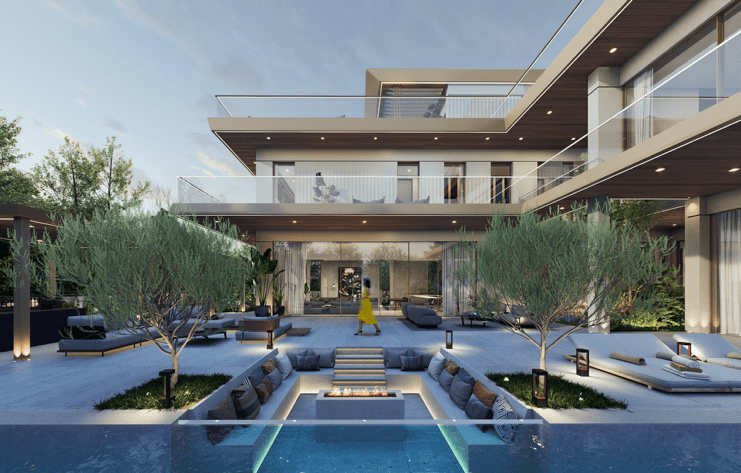
Indoor–outdoor living is more than a design preference in the Gulf. It is a way of inhabiting the landscape, using architecture to soften the extremes of climate while drawing people closer to nature. The challenge is familiar. Summers are intense. Winters are extraordinary. A home must therefore adapt, opening fully in the cool season and protecting comfort during the hotter months without losing atmosphere or connection.
For our studio, indoor–outdoor living is not about spectacle. It is about balance, clarity, and craft. It is the art of creating seamless transitions between interiors, shaded terraces, gardens and courtyards, using architecture as a mediator rather than a barrier. “Indoor–outdoor living only works when architecture, landscape and climate systems speak the same language,” says Lee Nellis, Principal Architect. “You cannot rely on one element. It has to be a complete, responsive environment.”
Opening the Home: Slim Sliding and Pivot Glazing
At the heart of Gulf indoor–outdoor living is the ability to open the facade completely during the winter. Slim sliding or large pivot glazing systems allow living rooms, dining spaces and family areas to dissolve into terraces, creating a single continuous landscape. Precision engineering matters. Frames disappear. Thresholds drop flush. Mechanical tracks are hidden. The aim is not simply openness, but effortlessness. “When glazing is designed well, it feels weightless,” explains Ashley Bothma, Senior Architect. “The movement is smooth, the sound is minimal, and suddenly the whole atmosphere of the home changes.”
Openable facades also redefine how spaces are used. A living room becomes a majlis in the early evening. A dining room becomes a garden pavilion. Family areas extend toward water features or shaded courtyards without feeling exposed.
Materials That Endure the Gulf Climate
The Gulf demands materials that perform. High heat, UV exposure, humidity and occasional sandstorms create conditions where only certain finishes survive long-term.
We often specify:
 Cooling and Comfort Technologies
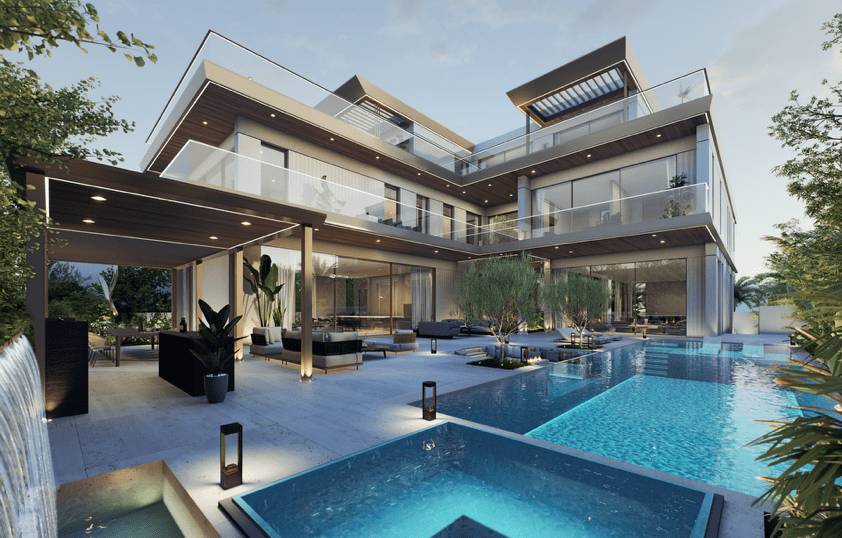
The magic of indoor–outdoor living in the Gulf comes from invisible engineering. To make open-plan spaces usable even in the warmer months, homes must rely on integrated cooling and air movement strategies.
This often includes:
Landscape as a Cooling Strategy
Indoor–outdoor living in the Gulf relies on landscape as much as architecture. Trees cast shade, water features cool the air, and planting softens boundaries between interior and exterior.
Landscape is not decorative. It is environmental performance. Margaret explains, “When trees, water and stone are positioned intentionally, they cool the microclimate and make outdoor rooms genuinely comfortable. It is one of the Gulf’s most timeless cooling strategies.” Landscape also creates emotional texture. The sound of water, filtered light through branches, the scent of planting after irrigation. These sensory elements turn transitional spaces into places where people linger.
A Living Threshold
Indoor–outdoor living is a living threshold rather than a static feature. It evolves with the seasons. It adapts to how families gather, host and unwind. It responds to climate without sacrificing comfort. It elevates architecture beyond enclosure and into experience.
For Nellis Architecture, the aim is simple. Create homes that feel connected, breathable and calm. Homes that allow nature to be felt, even in the Gulf’s extremes. When the architecture opens, the landscape answers. When the climate shifts, the home adapts. And when everything is designed with intention, the boundary between inside and outside becomes beautifully thin.
Cooling and Comfort Technologies
The magic of indoor–outdoor living in the Gulf comes from invisible engineering. To make open-plan spaces usable even in the warmer months, homes must rely on integrated cooling and air movement strategies.
This often includes:
Landscape as a Cooling Strategy
Indoor–outdoor living in the Gulf relies on landscape as much as architecture. Trees cast shade, water features cool the air, and planting softens boundaries between interior and exterior.
Landscape is not decorative. It is environmental performance. Margaret explains, “When trees, water and stone are positioned intentionally, they cool the microclimate and make outdoor rooms genuinely comfortable. It is one of the Gulf’s most timeless cooling strategies.” Landscape also creates emotional texture. The sound of water, filtered light through branches, the scent of planting after irrigation. These sensory elements turn transitional spaces into places where people linger.
A Living Threshold
Indoor–outdoor living is a living threshold rather than a static feature. It evolves with the seasons. It adapts to how families gather, host and unwind. It responds to climate without sacrificing comfort. It elevates architecture beyond enclosure and into experience.
For Nellis Architecture, the aim is simple. Create homes that feel connected, breathable and calm. Homes that allow nature to be felt, even in the Gulf’s extremes. When the architecture opens, the landscape answers. When the climate shifts, the home adapts. And when everything is designed with intention, the boundary between inside and outside becomes beautifully thin.
- Timber for warmth and tone, carefully treated for humidity and temperature swings
- Limestone cladding for natural colour variation and breathable performance
- Travertine for floors and terraces, non-slip and cool underfoot
- Granite for durability in high-contact areas
- Aluminium for shading elements, screens and window systems, resistant and light
 Cooling and Comfort Technologies
The magic of indoor–outdoor living in the Gulf comes from invisible engineering. To make open-plan spaces usable even in the warmer months, homes must rely on integrated cooling and air movement strategies.
This often includes:
Cooling and Comfort Technologies
The magic of indoor–outdoor living in the Gulf comes from invisible engineering. To make open-plan spaces usable even in the warmer months, homes must rely on integrated cooling and air movement strategies.
This often includes:
- Hidden VRF systems
- High-performance wall insulation to complement all systems
 Landscape as a Cooling Strategy
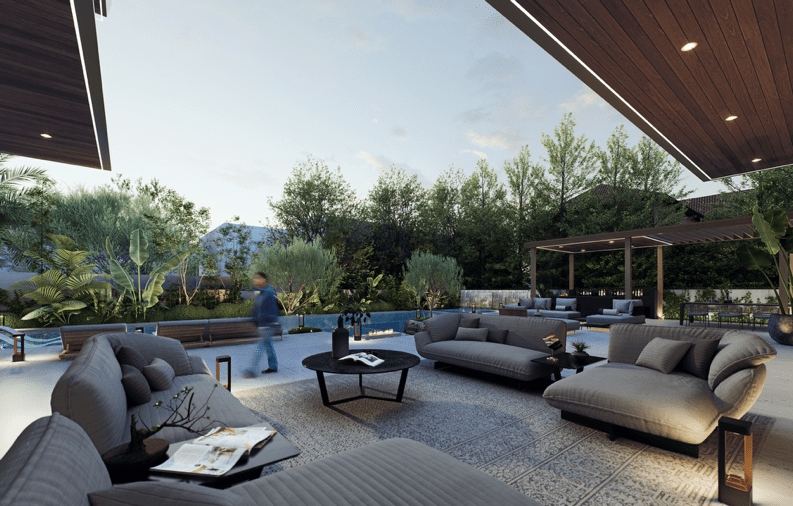
Indoor–outdoor living in the Gulf relies on landscape as much as architecture. Trees cast shade, water features cool the air, and planting softens boundaries between interior and exterior.
Landscape is not decorative. It is environmental performance. Margaret explains, “When trees, water and stone are positioned intentionally, they cool the microclimate and make outdoor rooms genuinely comfortable. It is one of the Gulf’s most timeless cooling strategies.” Landscape also creates emotional texture. The sound of water, filtered light through branches, the scent of planting after irrigation. These sensory elements turn transitional spaces into places where people linger.
A Living Threshold
Indoor–outdoor living is a living threshold rather than a static feature. It evolves with the seasons. It adapts to how families gather, host and unwind. It responds to climate without sacrificing comfort. It elevates architecture beyond enclosure and into experience.
For Nellis Architecture, the aim is simple. Create homes that feel connected, breathable and calm. Homes that allow nature to be felt, even in the Gulf’s extremes. When the architecture opens, the landscape answers. When the climate shifts, the home adapts. And when everything is designed with intention, the boundary between inside and outside becomes beautifully thin.
Landscape as a Cooling Strategy
Indoor–outdoor living in the Gulf relies on landscape as much as architecture. Trees cast shade, water features cool the air, and planting softens boundaries between interior and exterior.
Landscape is not decorative. It is environmental performance. Margaret explains, “When trees, water and stone are positioned intentionally, they cool the microclimate and make outdoor rooms genuinely comfortable. It is one of the Gulf’s most timeless cooling strategies.” Landscape also creates emotional texture. The sound of water, filtered light through branches, the scent of planting after irrigation. These sensory elements turn transitional spaces into places where people linger.
A Living Threshold
Indoor–outdoor living is a living threshold rather than a static feature. It evolves with the seasons. It adapts to how families gather, host and unwind. It responds to climate without sacrificing comfort. It elevates architecture beyond enclosure and into experience.
For Nellis Architecture, the aim is simple. Create homes that feel connected, breathable and calm. Homes that allow nature to be felt, even in the Gulf’s extremes. When the architecture opens, the landscape answers. When the climate shifts, the home adapts. And when everything is designed with intention, the boundary between inside and outside becomes beautifully thin.
February 15, 2026
What Makes a Palm Villa Truly Luxury | Luxury Villa Design Dubai | Nellis Architecture
February 14, 2026
Modern vs Contemporary Villas on the Palm | Luxury Villa Design Dubai | Nellis Architecture
February 13, 2026
How to Maximise Views Without Sacrificing Privacy | Luxury Villa Design Dubai | Nellis Architecture
February 3, 2026
Future-Proofing a Palm Jumeirah Home | Luxury Villa Design Dubai | Nellis Architecture
January 25, 2026
Common Mistakes When Building High-End Homes in Dubai | Luxury Villa Design | Nellis Architecture
December 29, 2025
Indoor–Outdoor Living in the Gulf | Climate, Shading and Landscape | Nellis Architecture
December 24, 2025
Designing Stillness on the Sea | 5-Star Single Residence Winner | Nellis Architecture
December 24, 2025
Designing the Extraordinary: Onyx and the Architecture of Confidence
December 22, 2025
25 Questions: The Art of a Good Architectural Brief | Nellis Architecture
December 18, 2025
Water as Experience | Pools, Rills and Thermal Comfort in Gulf Architecture | Nellis Architecture
December 17, 2025
Nellis Architecture 2025 Reflections: Culture, Clarity and the Year of Momentum
December 15, 2025
The Craft of Time: Why Enduring Architecture Matters
November 25, 2025
Sustainable Architecture for Dubai Homes
November 24, 2025
Miraia, Award-Winning 5-Star Single Residence | International Property Awards 2025
November 21, 2025
Heritage and Innovation in Dubai Architecture: How Tradition Meets Modern Design
November 07, 2025
Beachfront Resilience: Salt, Wind, And Glazing
November 01, 2025
AI In Home Design: Useful Or Hype?
September 30, 2025
Quiet Luxury and the Secret of Wabi-Sabi
September 24, 2025
Bespoke Design for Dubai Homes
August 15, 2025
Full Circle Moments and Firsts: A Conversation with Anastasia, Intern at Nellis Architecture
August 11, 2025
Seeing Beyond the Surface: My Journey in Architectural Visualisation
July 22, 2025
When the Brief Comes Pre-Built. A studio reflection with Pieter, Ben and Quinton | Nellis Architecture
July 9, 2025
Introducing Margaret – and Why Landscape Architecture Isn’t Just “Nice to Have”
July 1, 2025
Living Tomorrow: Reflections on the Future of Home Design
June 3, 2025
Building Trust Not Just Buildings: Marketing the Nellis Way
April 14, 2025
How the World Got Smaller: Architecture, Tech, and Keeping Design Real
May 1, 2025
Crafting Light, Telling Stories: A Reflection on Milan Design Week 2025
March 19, 2025
Using Historical Learnings Today
February 2, 2025
Visiting Vitrocsa in Switzerland: Nellis Architecture x GLASSLINE
January 31, 2025
Crafting Wellness at Nellis Architecture: A Year of Reflection and Growth
December 20, 2024
Nellis Architecture X Bauhaus: The Power of Collaboration in Property Projects
December 6, 2024
Lee Nellis: A Journey Through Architecture
November 6, 2024