


Home / News
Modern vs Contemporary Villas on the Palm | Luxury Villa Design Dubai | Nellis Architecture
February 14, 2026
On the Palm Jumeirah, architectural language carries weight. A villa’s style influences not only how it looks on day one, but how it performs, ages and holds value over time. One of the most common questions we are asked as a Dubai based architectural firm is deceptively simple. Should a Palm villa be modern or contemporary. The terms are often used interchangeably, but they describe different approaches to design. Understanding that difference is critical when investing in a bespoke villa on one of Dubai’s most recognisable addresses. As villa architects in Dubai working across luxury residential projects, we see this decision as less about labels and more about intent, longevity and lifestyle.
Why the Distinction Matters on the Palm
The Palm is a unique context. Plots are tightly configured. Views are prized. Neighbours are close. Design decisions are immediately visible and highly scrutinised. A villa that feels striking today must still feel relevant ten or fifteen years from now. Architectural choices directly influence resale premium, long term comfort and how a home responds to climate and use. “On the Palm, style is not just aesthetic,” says Ashley Bothma - Senior Architect. “It shapes how a home lives, performs and holds its value over time.” This is where the difference between modern and contemporary architecture becomes meaningful.
What Defines a Modern Villa
Modern architecture is rooted in a specific period and philosophy. It draws from mid twentieth century principles focused on clarity, structure and reduction. Modern villas often feature flat roofs, strong horizontal lines and open plans. Materials are typically concrete, steel and glass. Expression is controlled and deliberate. In modern villa architecture across the UAE, this approach can feel crisp and architectural. When executed well, it creates a strong identity and visual discipline. However, modern design can also be rigid. When applied without sensitivity to climate or context, it may struggle with heat gain, privacy or evolving lifestyle needs. A modern villa on the Palm requires careful calibration. Large expanses of glazing must be shaded. Open plans must be zoned thoughtfully. Otherwise, form can override function.
What Contemporary Villas Do Differently
Contemporary architecture is not tied to a single era. It reflects how people live now and how that may change in the future. A contemporary villa evolves with technology, materials, and lifestyle.
It builds on modernism’s clarity of form and functional planning, refined for contemporary life.
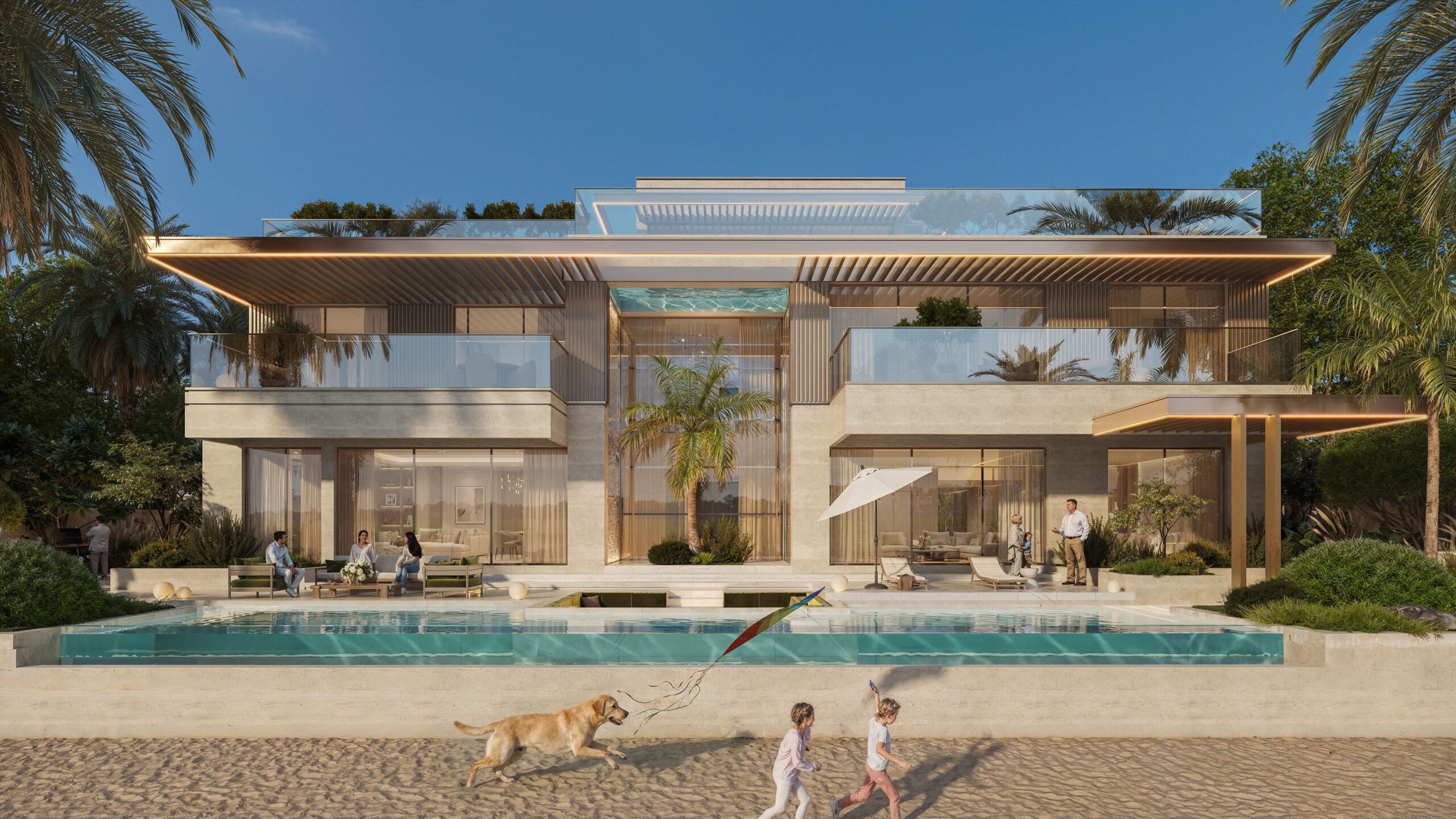
It adapts rather than repeats.. In luxury villa design in Dubai, contemporary homes often integrate deeper overhangs, layered facades and warmer material palettes. Natural stone, textured plaster and timber details replace harder industrial finishes. “Contemporary villas allow more flexibility,” explains Matas Belevicius, Associate Architect. “They respond better to climate, construction realities and how families actually use their homes.” This adaptability is particularly valuable on the Palm, where sun, salt and proximity require resilience.
Climate and Comfort as Design Drivers
Dubai’s climate is unforgiving. Architecture that ignores it quickly feels uncomfortable. Modern villas often prioritise openness. Contemporary villas prioritise comfort. Shading, orientation and massing become central to design decisions. Deep overhangs reduce heat gain. Courtyards improve ventilation. Layered elevations manage privacy and sun exposure simultaneously. As an architectural firm in Dubai delivering integrated architectural design services, we see contemporary design as better suited to long term comfort without sacrificing architectural clarity.
Interiors and Architecture Must Speak the Same Language
Dubai villa interior design is inseparable from architectural intent. A modern shell with a contemporary interior often feels disjointed. Alignment matters. Contemporary villas allow interiors to evolve more naturally. Furniture layouts, bespoke joinery and lighting strategies integrate seamlessly with architectural form. We work closely with interior design companies in Dubai to ensure that architecture supports interiors rather than constraining them. Ceiling heights, window proportions and circulation patterns all influence how spaces are furnished and experienced. Luxury home design in Dubai succeeds when architecture and interiors are conceived together.
 Landscape as an Extension of Style
Landscape architecture in Dubai plays a critical role in defining whether a villa feels modern or contemporary. Modern villas often feature minimal landscapes with sharp geometry. Contemporary villas embrace layered planting, softer transitions and outdoor rooms that extend living spaces. “Landscape should feel like part of the architecture,” says Margaret Pluta, Landscape Architect. “On the Palm, outdoor spaces must balance openness with privacy while remaining usable year round.” Pools, terraces and sunken seating areas often feel more resolved within a contemporary architectural framework.
Technology Without Dictating Design
Smart home automation is now expected in luxury villas. The difference lies in how it is integrated. Modern villas may showcase technology overtly. Contemporary villas absorb it quietly. Lighting scenes, shading controls and climate systems should support living rather than dominate it. Architectural design services must anticipate future upgrades without locking homes into specific systems. This flexibility contributes directly to resale premium and long term relevance.
Resale and Longevity
One of the most overlooked aspects of architectural style is how it ages. Modern villas can feel iconic, but they can also feel dated if overly specific. Contemporary villas tend to age more gracefully by avoiding extremes. Materials selected for longevity, layouts designed for adaptability and facades that weather well all influence long term value. As one of the architecture firms in Dubai focused on bespoke residential architecture, we advise clients to think beyond first impressions. Timeless materials and thoughtful detailing protect investment.
The Human Insight
Clients rarely live exactly as they imagine at the outset. Families grow. Entertaining habits change. Privacy needs shift. The most successful villas are those that adapt without compromise. “Good architecture allows people to grow into their homes,” says Lee. “That is where real luxury sits.”This insight often guides clients toward contemporary design approaches that prioritise flexibility over formality.
Choosing What Fits, Not What Trends
Modern and contemporary are not opposing choices. They are tools. Some Palm villas benefit from a modern architectural language refined with contemporary sensitivity. Others lean fully contemporary to accommodate complex living patterns. What matters is clarity of intent, quality of execution and alignment with lifestyle. The best architecture firms in Dubai do not impose styles. They interpret them.
Explore our approach to luxury villa design across Dubai and the UAE.
Landscape as an Extension of Style
Landscape architecture in Dubai plays a critical role in defining whether a villa feels modern or contemporary. Modern villas often feature minimal landscapes with sharp geometry. Contemporary villas embrace layered planting, softer transitions and outdoor rooms that extend living spaces. “Landscape should feel like part of the architecture,” says Margaret Pluta, Landscape Architect. “On the Palm, outdoor spaces must balance openness with privacy while remaining usable year round.” Pools, terraces and sunken seating areas often feel more resolved within a contemporary architectural framework.
Technology Without Dictating Design
Smart home automation is now expected in luxury villas. The difference lies in how it is integrated. Modern villas may showcase technology overtly. Contemporary villas absorb it quietly. Lighting scenes, shading controls and climate systems should support living rather than dominate it. Architectural design services must anticipate future upgrades without locking homes into specific systems. This flexibility contributes directly to resale premium and long term relevance.
Resale and Longevity
One of the most overlooked aspects of architectural style is how it ages. Modern villas can feel iconic, but they can also feel dated if overly specific. Contemporary villas tend to age more gracefully by avoiding extremes. Materials selected for longevity, layouts designed for adaptability and facades that weather well all influence long term value. As one of the architecture firms in Dubai focused on bespoke residential architecture, we advise clients to think beyond first impressions. Timeless materials and thoughtful detailing protect investment.
The Human Insight
Clients rarely live exactly as they imagine at the outset. Families grow. Entertaining habits change. Privacy needs shift. The most successful villas are those that adapt without compromise. “Good architecture allows people to grow into their homes,” says Lee. “That is where real luxury sits.”This insight often guides clients toward contemporary design approaches that prioritise flexibility over formality.
Choosing What Fits, Not What Trends
Modern and contemporary are not opposing choices. They are tools. Some Palm villas benefit from a modern architectural language refined with contemporary sensitivity. Others lean fully contemporary to accommodate complex living patterns. What matters is clarity of intent, quality of execution and alignment with lifestyle. The best architecture firms in Dubai do not impose styles. They interpret them.
Explore our approach to luxury villa design across Dubai and the UAE.
 Landscape as an Extension of Style
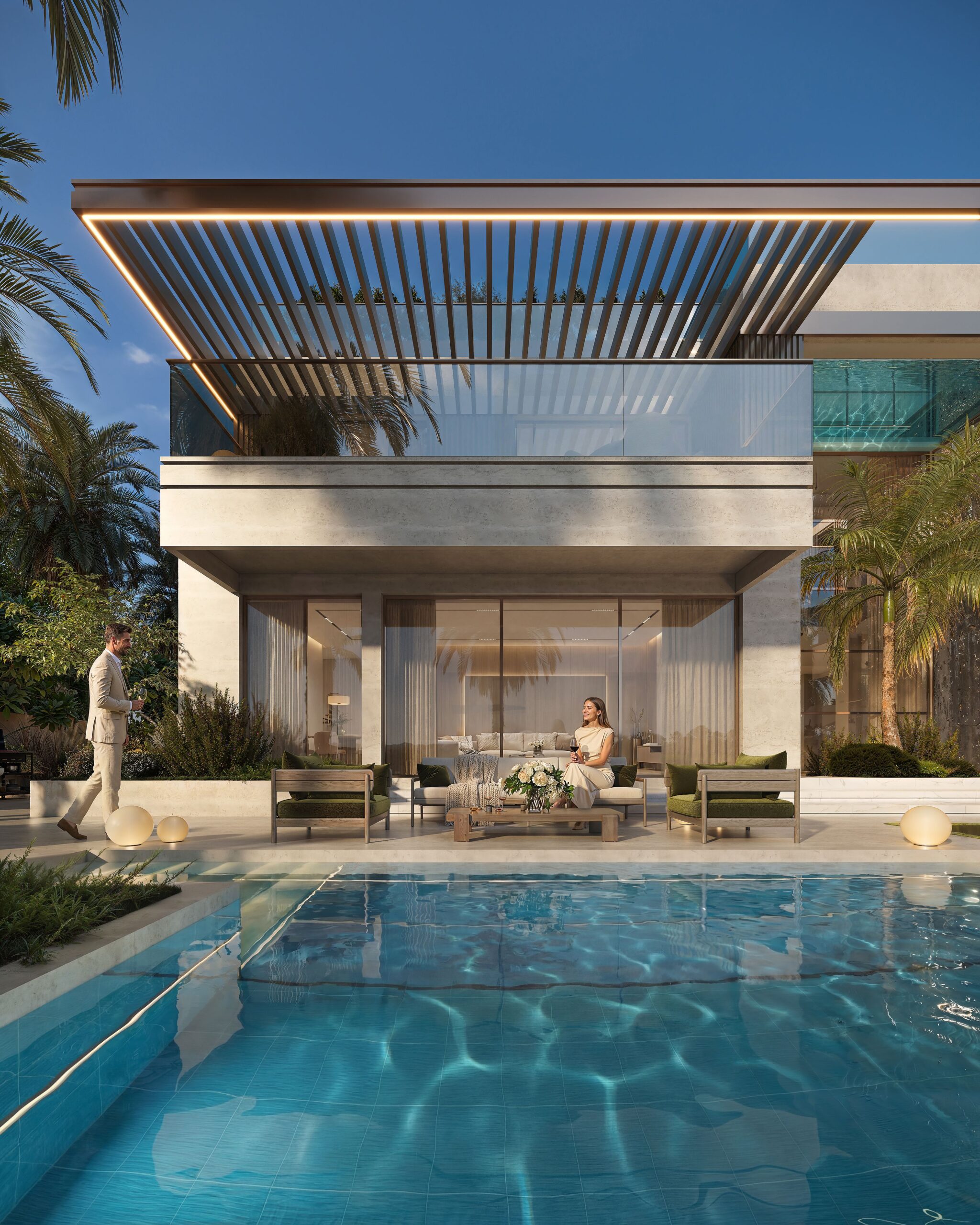
Landscape architecture in Dubai plays a critical role in defining whether a villa feels modern or contemporary. Modern villas often feature minimal landscapes with sharp geometry. Contemporary villas embrace layered planting, softer transitions and outdoor rooms that extend living spaces. “Landscape should feel like part of the architecture,” says Margaret Pluta, Landscape Architect. “On the Palm, outdoor spaces must balance openness with privacy while remaining usable year round.” Pools, terraces and sunken seating areas often feel more resolved within a contemporary architectural framework.
Technology Without Dictating Design
Smart home automation is now expected in luxury villas. The difference lies in how it is integrated. Modern villas may showcase technology overtly. Contemporary villas absorb it quietly. Lighting scenes, shading controls and climate systems should support living rather than dominate it. Architectural design services must anticipate future upgrades without locking homes into specific systems. This flexibility contributes directly to resale premium and long term relevance.
Resale and Longevity
One of the most overlooked aspects of architectural style is how it ages. Modern villas can feel iconic, but they can also feel dated if overly specific. Contemporary villas tend to age more gracefully by avoiding extremes. Materials selected for longevity, layouts designed for adaptability and facades that weather well all influence long term value. As one of the architecture firms in Dubai focused on bespoke residential architecture, we advise clients to think beyond first impressions. Timeless materials and thoughtful detailing protect investment.
The Human Insight
Clients rarely live exactly as they imagine at the outset. Families grow. Entertaining habits change. Privacy needs shift. The most successful villas are those that adapt without compromise. “Good architecture allows people to grow into their homes,” says Lee. “That is where real luxury sits.”This insight often guides clients toward contemporary design approaches that prioritise flexibility over formality.
Choosing What Fits, Not What Trends
Modern and contemporary are not opposing choices. They are tools. Some Palm villas benefit from a modern architectural language refined with contemporary sensitivity. Others lean fully contemporary to accommodate complex living patterns. What matters is clarity of intent, quality of execution and alignment with lifestyle. The best architecture firms in Dubai do not impose styles. They interpret them.
Explore our approach to luxury villa design across Dubai and the UAE.
Landscape as an Extension of Style
Landscape architecture in Dubai plays a critical role in defining whether a villa feels modern or contemporary. Modern villas often feature minimal landscapes with sharp geometry. Contemporary villas embrace layered planting, softer transitions and outdoor rooms that extend living spaces. “Landscape should feel like part of the architecture,” says Margaret Pluta, Landscape Architect. “On the Palm, outdoor spaces must balance openness with privacy while remaining usable year round.” Pools, terraces and sunken seating areas often feel more resolved within a contemporary architectural framework.
Technology Without Dictating Design
Smart home automation is now expected in luxury villas. The difference lies in how it is integrated. Modern villas may showcase technology overtly. Contemporary villas absorb it quietly. Lighting scenes, shading controls and climate systems should support living rather than dominate it. Architectural design services must anticipate future upgrades without locking homes into specific systems. This flexibility contributes directly to resale premium and long term relevance.
Resale and Longevity
One of the most overlooked aspects of architectural style is how it ages. Modern villas can feel iconic, but they can also feel dated if overly specific. Contemporary villas tend to age more gracefully by avoiding extremes. Materials selected for longevity, layouts designed for adaptability and facades that weather well all influence long term value. As one of the architecture firms in Dubai focused on bespoke residential architecture, we advise clients to think beyond first impressions. Timeless materials and thoughtful detailing protect investment.
The Human Insight
Clients rarely live exactly as they imagine at the outset. Families grow. Entertaining habits change. Privacy needs shift. The most successful villas are those that adapt without compromise. “Good architecture allows people to grow into their homes,” says Lee. “That is where real luxury sits.”This insight often guides clients toward contemporary design approaches that prioritise flexibility over formality.
Choosing What Fits, Not What Trends
Modern and contemporary are not opposing choices. They are tools. Some Palm villas benefit from a modern architectural language refined with contemporary sensitivity. Others lean fully contemporary to accommodate complex living patterns. What matters is clarity of intent, quality of execution and alignment with lifestyle. The best architecture firms in Dubai do not impose styles. They interpret them.
Explore our approach to luxury villa design across Dubai and the UAE.
February 14, 2026
Modern vs Contemporary Villas on the Palm | Luxury Villa Design Dubai | Nellis Architecture
February 13, 2026
How to Maximise Views Without Sacrificing Privacy | Luxury Villa Design Dubai | Nellis Architecture
February 3, 2026
Future-Proofing a Palm Jumeirah Home | Luxury Villa Design Dubai | Nellis Architecture
January 25, 2026
Common Mistakes When Building High-End Homes in Dubai | Luxury Villa Design | Nellis Architecture
December 29, 2025
Indoor–Outdoor Living in the Gulf | Climate, Shading and Landscape | Nellis Architecture
December 24, 2025
Designing Stillness on the Sea | 5-Star Single Residence Winner | Nellis Architecture
December 24, 2025
Designing the Extraordinary: Onyx and the Architecture of Confidence
December 22, 2025
25 Questions: The Art of a Good Architectural Brief | Nellis Architecture
December 18, 2025
Water as Experience | Pools, Rills and Thermal Comfort in Gulf Architecture | Nellis Architecture
December 17, 2025
Nellis Architecture 2025 Reflections: Culture, Clarity and the Year of Momentum
December 15, 2025
The Craft of Time: Why Enduring Architecture Matters
November 25, 2025
Sustainable Architecture for Dubai Homes
November 24, 2025
Miraia, Award-Winning 5-Star Single Residence | International Property Awards 2025
November 21, 2025
Heritage and Innovation in Dubai Architecture: How Tradition Meets Modern Design
November 07, 2025
Beachfront Resilience: Salt, Wind, And Glazing
November 01, 2025
AI In Home Design: Useful Or Hype?
September 30, 2025
Quiet Luxury and the Secret of Wabi-Sabi
September 24, 2025
Bespoke Design for Dubai Homes
August 15, 2025
Full Circle Moments and Firsts: A Conversation with Anastasia, Intern at Nellis Architecture
August 11, 2025
Seeing Beyond the Surface: My Journey in Architectural Visualisation
July 22, 2025
When the Brief Comes Pre-Built. A studio reflection with Pieter, Ben and Quinton | Nellis Architecture
July 9, 2025
Introducing Margaret – and Why Landscape Architecture Isn’t Just “Nice to Have”
July 1, 2025
Living Tomorrow: Reflections on the Future of Home Design
June 3, 2025
Building Trust Not Just Buildings: Marketing the Nellis Way
April 14, 2025
How the World Got Smaller: Architecture, Tech, and Keeping Design Real
May 1, 2025
Crafting Light, Telling Stories: A Reflection on Milan Design Week 2025
March 19, 2025
Using Historical Learnings Today
February 2, 2025
Visiting Vitrocsa in Switzerland: Nellis Architecture x GLASSLINE
January 31, 2025
Crafting Wellness at Nellis Architecture: A Year of Reflection and Growth
December 20, 2024
Nellis Architecture X Bauhaus: The Power of Collaboration in Property Projects
December 6, 2024
Lee Nellis: A Journey Through Architecture
November 6, 2024
One-Year Anniversary at Nellis Architecture: A Journey of Vision, Craft, and Growth
November 07, 2025