


Home / News
Water, Reflection and Stillness: Islamic Garden Principles in Contemporary Palm Jumeirah Villa Design
April 4, 2026
Across Palm Jumeirah and Dubai’s wider coastal landscape, the idea of luxury outdoor space is quietly shifting. Scale and spectacle are no longer enough. Increasingly, clients commissioning a luxury architect in Dubai or appointing a leading architectural firm in Dubai are seeking something less overt and more atmospheric: gardens that create calm, privacy and sensory balance rather than simply visual impact.
This instinct has deep roots. Historic Islamic garden design was never merely ornamental. It was spatial, climatic and psychological. Water, geometry and shade were carefully orchestrated to create environments of reflection and stillness. Today, those principles are being reinterpreted within contemporary luxury villa design and refined luxury home design in Dubai, producing outdoor environments that feel culturally resonant yet unmistakably modern.
Among established Dubai architects and thoughtful design studios, villa design in the UAE increasingly integrates landscape architecture in Dubai as a core architectural discipline rather than an afterthought. Within the best architecture firms in Dubai and top architecture companies in Dubai, landscape is understood as part of the architectural narrative itself. As Margaret Pluta often describes it, landscape is the first emotional layer of a home. When water, light and planting are balanced with restraint, the entire experience of luxury villa interior design and Dubai villa interior design becomes more grounded, more cohesive. Sustainable architecture in Dubai reinforces this approach, encouraging water efficiency, passive cooling and microclimate creation, all carefully realised through disciplined architecture project management in Dubai.
Water as Architecture, Not Ornament
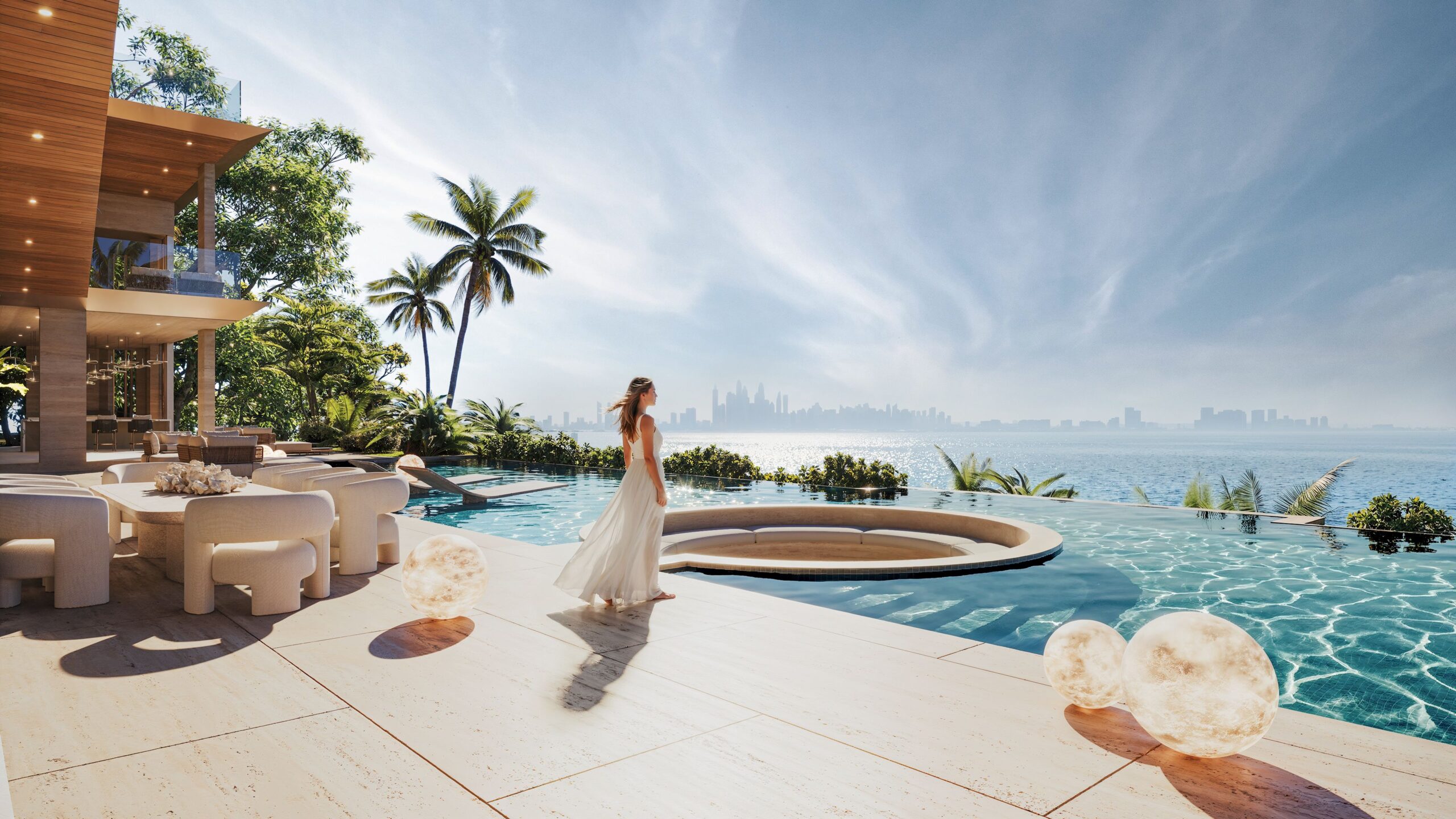
 In future-proof residential architecture across the UAE, water is increasingly treated as an architectural material rather than decorative embellishment. Historically, water in Islamic gardens served multiple functions. It cooled air, reflected light, expanded perceived space and provided a sensory counterpoint to heat and glare. In contemporary Palm Jumeirah villas, these principles translate into linear reflecting pools, quiet courtyards and subtly animated water surfaces integrated into the architectural composition itself.
Long-term luxury villa design in Dubai often positions water to define arrival sequences, frame axial views or soften transitions between indoor and outdoor living. In coastal settings where the sea already dominates the horizon, carefully calibrated water features introduce layered visual depth, creating a dialogue between contained reflection and open vista.
Luxury villa interior design is directly influenced by this presence. Interior spaces overlooking reflective pools benefit from amplified daylight and gentle movement of light across ceilings and walls. Interior design companies in Dubai working within modern villa interior design frameworks frequently coordinate interior material palettes with external water features, ensuring that stone, timber and tone resonate across boundaries.
Smart home automation supports this integration through discreet water management systems, lighting control and efficiency monitoring. Yet, as Pieter Delport often notes, while AI assists in modelling hydraulic systems and irrigation planning, it cannot anticipate the emotional effect of reflection and sound. Architecture remains a human art, particularly when designing homes intended to foster stillness rather than spectacle.
Architectural design services must therefore balance technical precision with spatial storytelling, ensuring water becomes part of the lived experience rather than a technological display.
Geometry, Shade and the Shaping of Movement
Islamic gardens were structured through geometry. Order created calm. Repetition created rhythm. Shade provided relief. In contemporary luxury home design in Dubai, these principles are translated through structured planting, colonnades, pergolas and outdoor rooms defined by both architecture and landscape. A carefully considered villa design in the UAE integrates shaded pathways and framed perspectives that guide movement while offering protection from sun and exposure.
Sustainable architecture in Dubai increasingly relies on planting and architectural shading as passive cooling strategies, reducing mechanical demand while enhancing spatial comfort. Outdoor colonnades and filtered pergolas do more than block light; they choreograph how space is experienced throughout the day.
Luxury villa design and luxury villa interior design benefit directly from this orchestration. Shaded exterior spaces extend interior living areas beyond the building envelope, allowing villa interior design in Dubai to embrace fluid transitions between inside and out. Modern villa interior design often relies on controlled daylight penetration, ensuring rooms remain bright yet serene.
As Quinton Murdoch frequently observes, successful architecture is rarely about adding more. It is about carefully controlling what is permitted into space, whether that is light, view or movement. Landscape architecture in Dubai is integrated into the design process and develops alongside the project, ensuring geometry, planting are aligned with structural form.
Smart home automation enhances this dialogue, adjusting shading systems according to solar movement and occupancy, reinforcing the long-term performance ambitions of luxury villa design in Dubai.
Stillness as the Highest Form of Luxury
Perhaps the most enduring lesson drawn from Islamic garden traditions is the prioritisation of stillness.
In a city defined by pace and spectacle, the ability to create moments of pause has become a profound architectural ambition. Future-focused residential architecture in the UAE increasingly recognises that emotional comfort holds equal weight to physical comfort.
A refined luxury architect in Dubai designing for Palm Jumeirah will often prioritise layered privacy, acoustic softness and visual restraint alongside structural performance. Luxury villa design that embraces stillness tends to favour controlled planting palettes, subtle water movement and disciplined material selection rather than overt statement.
Luxury villa interior design and Dubai villa interior design echo this philosophy. Natural stone, warm timber and softly layered lighting create interiors that feel calm across time. Interior design companies in Dubai frequently collaborate closely with architecture firms in Dubai to ensure that interior and exterior environments speak the same quiet language.
Smart home automation contributes to this atmosphere through adaptive lighting scenes, discreet environmental control and automated privacy settings. Sustainable architecture in Dubai supports this emotional stability by reducing sensory stress from glare, heat and noise.
As Lee Nellis often reflects, true luxury is rarely loud. It is measured, balanced and deeply considered.
Across Palm Jumeirah and coastal Dubai, homes that successfully integrate water, reflection and stillness are emerging as benchmarks for contemporary luxury home design in Dubai. In a region shaped by climatic intensity and urban density, the ability to create private, calm and emotionally balanced environments may ultimately be the most valuable architectural achievement of all.
Design Intent Summary
This article positions Islamic garden principles as a timeless framework for designing contemporary luxury villa landscapes and outdoor living environments in Palm Jumeirah. It reinforces Nellis Architecture’s philosophy of emotional design, climate intelligence and integrated architecture and landscape thinking.
In future-proof residential architecture across the UAE, water is increasingly treated as an architectural material rather than decorative embellishment. Historically, water in Islamic gardens served multiple functions. It cooled air, reflected light, expanded perceived space and provided a sensory counterpoint to heat and glare. In contemporary Palm Jumeirah villas, these principles translate into linear reflecting pools, quiet courtyards and subtly animated water surfaces integrated into the architectural composition itself.
Long-term luxury villa design in Dubai often positions water to define arrival sequences, frame axial views or soften transitions between indoor and outdoor living. In coastal settings where the sea already dominates the horizon, carefully calibrated water features introduce layered visual depth, creating a dialogue between contained reflection and open vista.
Luxury villa interior design is directly influenced by this presence. Interior spaces overlooking reflective pools benefit from amplified daylight and gentle movement of light across ceilings and walls. Interior design companies in Dubai working within modern villa interior design frameworks frequently coordinate interior material palettes with external water features, ensuring that stone, timber and tone resonate across boundaries.
Smart home automation supports this integration through discreet water management systems, lighting control and efficiency monitoring. Yet, as Pieter Delport often notes, while AI assists in modelling hydraulic systems and irrigation planning, it cannot anticipate the emotional effect of reflection and sound. Architecture remains a human art, particularly when designing homes intended to foster stillness rather than spectacle.
Architectural design services must therefore balance technical precision with spatial storytelling, ensuring water becomes part of the lived experience rather than a technological display.
Geometry, Shade and the Shaping of Movement
Islamic gardens were structured through geometry. Order created calm. Repetition created rhythm. Shade provided relief. In contemporary luxury home design in Dubai, these principles are translated through structured planting, colonnades, pergolas and outdoor rooms defined by both architecture and landscape. A carefully considered villa design in the UAE integrates shaded pathways and framed perspectives that guide movement while offering protection from sun and exposure.
Sustainable architecture in Dubai increasingly relies on planting and architectural shading as passive cooling strategies, reducing mechanical demand while enhancing spatial comfort. Outdoor colonnades and filtered pergolas do more than block light; they choreograph how space is experienced throughout the day.
Luxury villa design and luxury villa interior design benefit directly from this orchestration. Shaded exterior spaces extend interior living areas beyond the building envelope, allowing villa interior design in Dubai to embrace fluid transitions between inside and out. Modern villa interior design often relies on controlled daylight penetration, ensuring rooms remain bright yet serene.
As Quinton Murdoch frequently observes, successful architecture is rarely about adding more. It is about carefully controlling what is permitted into space, whether that is light, view or movement. Landscape architecture in Dubai is integrated into the design process and develops alongside the project, ensuring geometry, planting are aligned with structural form.
Smart home automation enhances this dialogue, adjusting shading systems according to solar movement and occupancy, reinforcing the long-term performance ambitions of luxury villa design in Dubai.
Stillness as the Highest Form of Luxury
Perhaps the most enduring lesson drawn from Islamic garden traditions is the prioritisation of stillness.
In a city defined by pace and spectacle, the ability to create moments of pause has become a profound architectural ambition. Future-focused residential architecture in the UAE increasingly recognises that emotional comfort holds equal weight to physical comfort.
A refined luxury architect in Dubai designing for Palm Jumeirah will often prioritise layered privacy, acoustic softness and visual restraint alongside structural performance. Luxury villa design that embraces stillness tends to favour controlled planting palettes, subtle water movement and disciplined material selection rather than overt statement.
Luxury villa interior design and Dubai villa interior design echo this philosophy. Natural stone, warm timber and softly layered lighting create interiors that feel calm across time. Interior design companies in Dubai frequently collaborate closely with architecture firms in Dubai to ensure that interior and exterior environments speak the same quiet language.
Smart home automation contributes to this atmosphere through adaptive lighting scenes, discreet environmental control and automated privacy settings. Sustainable architecture in Dubai supports this emotional stability by reducing sensory stress from glare, heat and noise.
As Lee Nellis often reflects, true luxury is rarely loud. It is measured, balanced and deeply considered.
Across Palm Jumeirah and coastal Dubai, homes that successfully integrate water, reflection and stillness are emerging as benchmarks for contemporary luxury home design in Dubai. In a region shaped by climatic intensity and urban density, the ability to create private, calm and emotionally balanced environments may ultimately be the most valuable architectural achievement of all.
Design Intent Summary
This article positions Islamic garden principles as a timeless framework for designing contemporary luxury villa landscapes and outdoor living environments in Palm Jumeirah. It reinforces Nellis Architecture’s philosophy of emotional design, climate intelligence and integrated architecture and landscape thinking.
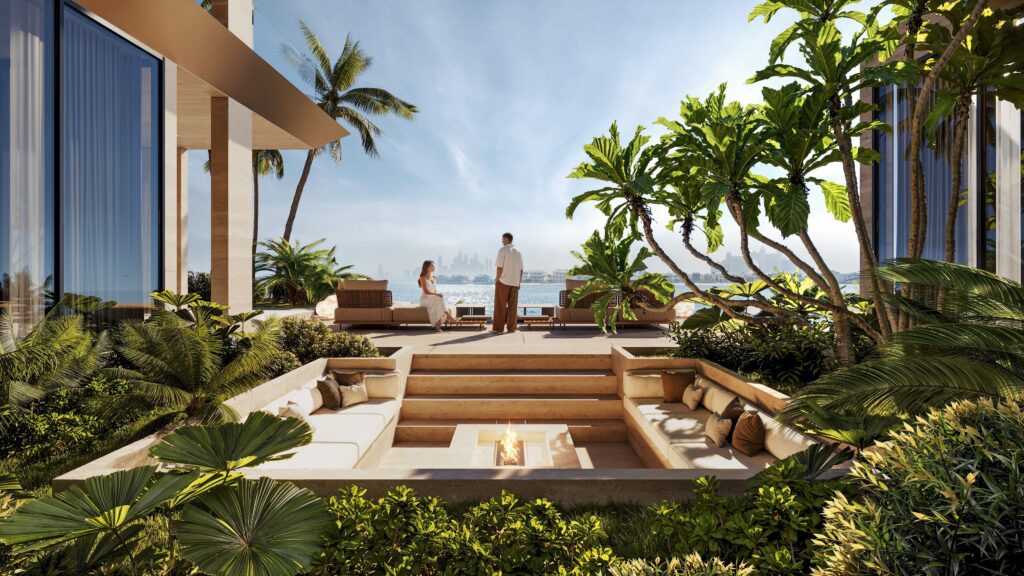 In future-proof residential architecture across the UAE, water is increasingly treated as an architectural material rather than decorative embellishment. Historically, water in Islamic gardens served multiple functions. It cooled air, reflected light, expanded perceived space and provided a sensory counterpoint to heat and glare. In contemporary Palm Jumeirah villas, these principles translate into linear reflecting pools, quiet courtyards and subtly animated water surfaces integrated into the architectural composition itself.
Long-term luxury villa design in Dubai often positions water to define arrival sequences, frame axial views or soften transitions between indoor and outdoor living. In coastal settings where the sea already dominates the horizon, carefully calibrated water features introduce layered visual depth, creating a dialogue between contained reflection and open vista.
Luxury villa interior design is directly influenced by this presence. Interior spaces overlooking reflective pools benefit from amplified daylight and gentle movement of light across ceilings and walls. Interior design companies in Dubai working within modern villa interior design frameworks frequently coordinate interior material palettes with external water features, ensuring that stone, timber and tone resonate across boundaries.
Smart home automation supports this integration through discreet water management systems, lighting control and efficiency monitoring. Yet, as Pieter Delport often notes, while AI assists in modelling hydraulic systems and irrigation planning, it cannot anticipate the emotional effect of reflection and sound. Architecture remains a human art, particularly when designing homes intended to foster stillness rather than spectacle.
Architectural design services must therefore balance technical precision with spatial storytelling, ensuring water becomes part of the lived experience rather than a technological display.
Geometry, Shade and the Shaping of Movement
Islamic gardens were structured through geometry. Order created calm. Repetition created rhythm. Shade provided relief. In contemporary luxury home design in Dubai, these principles are translated through structured planting, colonnades, pergolas and outdoor rooms defined by both architecture and landscape. A carefully considered villa design in the UAE integrates shaded pathways and framed perspectives that guide movement while offering protection from sun and exposure.
Sustainable architecture in Dubai increasingly relies on planting and architectural shading as passive cooling strategies, reducing mechanical demand while enhancing spatial comfort. Outdoor colonnades and filtered pergolas do more than block light; they choreograph how space is experienced throughout the day.
Luxury villa design and luxury villa interior design benefit directly from this orchestration. Shaded exterior spaces extend interior living areas beyond the building envelope, allowing villa interior design in Dubai to embrace fluid transitions between inside and out. Modern villa interior design often relies on controlled daylight penetration, ensuring rooms remain bright yet serene.
As Quinton Murdoch frequently observes, successful architecture is rarely about adding more. It is about carefully controlling what is permitted into space, whether that is light, view or movement. Landscape architecture in Dubai is integrated into the design process and develops alongside the project, ensuring geometry, planting are aligned with structural form.
Smart home automation enhances this dialogue, adjusting shading systems according to solar movement and occupancy, reinforcing the long-term performance ambitions of luxury villa design in Dubai.
Stillness as the Highest Form of Luxury
In future-proof residential architecture across the UAE, water is increasingly treated as an architectural material rather than decorative embellishment. Historically, water in Islamic gardens served multiple functions. It cooled air, reflected light, expanded perceived space and provided a sensory counterpoint to heat and glare. In contemporary Palm Jumeirah villas, these principles translate into linear reflecting pools, quiet courtyards and subtly animated water surfaces integrated into the architectural composition itself.
Long-term luxury villa design in Dubai often positions water to define arrival sequences, frame axial views or soften transitions between indoor and outdoor living. In coastal settings where the sea already dominates the horizon, carefully calibrated water features introduce layered visual depth, creating a dialogue between contained reflection and open vista.
Luxury villa interior design is directly influenced by this presence. Interior spaces overlooking reflective pools benefit from amplified daylight and gentle movement of light across ceilings and walls. Interior design companies in Dubai working within modern villa interior design frameworks frequently coordinate interior material palettes with external water features, ensuring that stone, timber and tone resonate across boundaries.
Smart home automation supports this integration through discreet water management systems, lighting control and efficiency monitoring. Yet, as Pieter Delport often notes, while AI assists in modelling hydraulic systems and irrigation planning, it cannot anticipate the emotional effect of reflection and sound. Architecture remains a human art, particularly when designing homes intended to foster stillness rather than spectacle.
Architectural design services must therefore balance technical precision with spatial storytelling, ensuring water becomes part of the lived experience rather than a technological display.
Geometry, Shade and the Shaping of Movement
Islamic gardens were structured through geometry. Order created calm. Repetition created rhythm. Shade provided relief. In contemporary luxury home design in Dubai, these principles are translated through structured planting, colonnades, pergolas and outdoor rooms defined by both architecture and landscape. A carefully considered villa design in the UAE integrates shaded pathways and framed perspectives that guide movement while offering protection from sun and exposure.
Sustainable architecture in Dubai increasingly relies on planting and architectural shading as passive cooling strategies, reducing mechanical demand while enhancing spatial comfort. Outdoor colonnades and filtered pergolas do more than block light; they choreograph how space is experienced throughout the day.
Luxury villa design and luxury villa interior design benefit directly from this orchestration. Shaded exterior spaces extend interior living areas beyond the building envelope, allowing villa interior design in Dubai to embrace fluid transitions between inside and out. Modern villa interior design often relies on controlled daylight penetration, ensuring rooms remain bright yet serene.
As Quinton Murdoch frequently observes, successful architecture is rarely about adding more. It is about carefully controlling what is permitted into space, whether that is light, view or movement. Landscape architecture in Dubai is integrated into the design process and develops alongside the project, ensuring geometry, planting are aligned with structural form.
Smart home automation enhances this dialogue, adjusting shading systems according to solar movement and occupancy, reinforcing the long-term performance ambitions of luxury villa design in Dubai.
Stillness as the Highest Form of Luxury
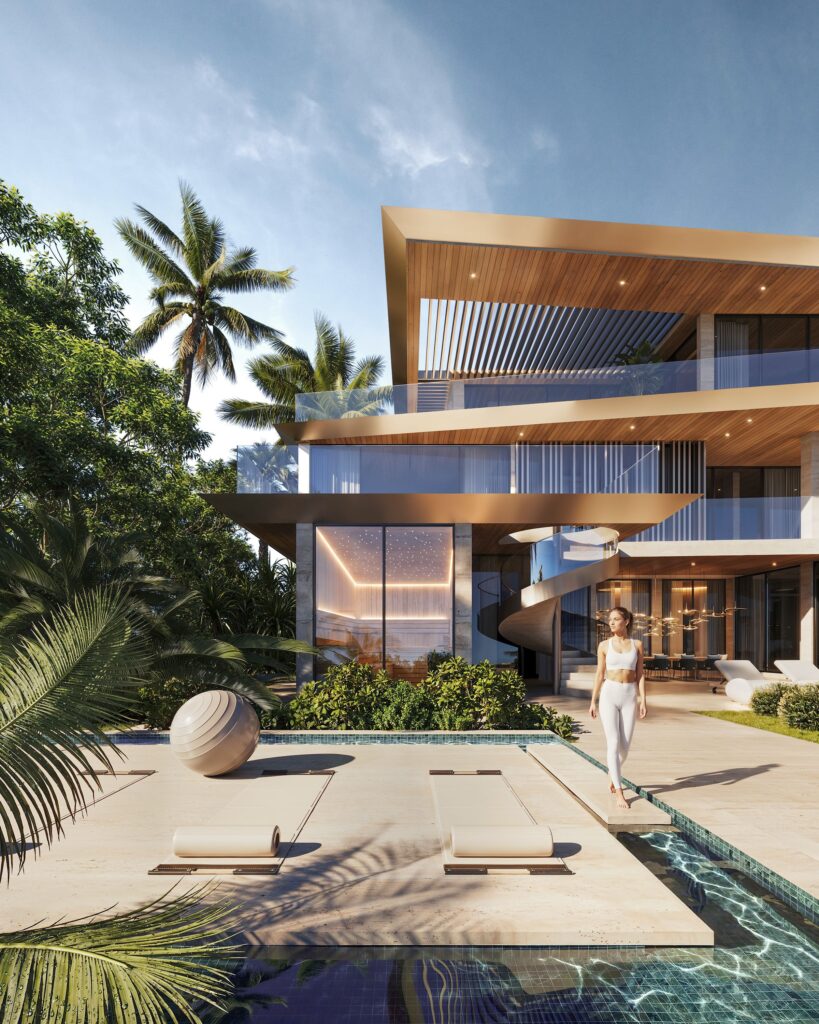 Perhaps the most enduring lesson drawn from Islamic garden traditions is the prioritisation of stillness.
In a city defined by pace and spectacle, the ability to create moments of pause has become a profound architectural ambition. Future-focused residential architecture in the UAE increasingly recognises that emotional comfort holds equal weight to physical comfort.
A refined luxury architect in Dubai designing for Palm Jumeirah will often prioritise layered privacy, acoustic softness and visual restraint alongside structural performance. Luxury villa design that embraces stillness tends to favour controlled planting palettes, subtle water movement and disciplined material selection rather than overt statement.
Luxury villa interior design and Dubai villa interior design echo this philosophy. Natural stone, warm timber and softly layered lighting create interiors that feel calm across time. Interior design companies in Dubai frequently collaborate closely with architecture firms in Dubai to ensure that interior and exterior environments speak the same quiet language.
Smart home automation contributes to this atmosphere through adaptive lighting scenes, discreet environmental control and automated privacy settings. Sustainable architecture in Dubai supports this emotional stability by reducing sensory stress from glare, heat and noise.
As Lee Nellis often reflects, true luxury is rarely loud. It is measured, balanced and deeply considered.
Across Palm Jumeirah and coastal Dubai, homes that successfully integrate water, reflection and stillness are emerging as benchmarks for contemporary luxury home design in Dubai. In a region shaped by climatic intensity and urban density, the ability to create private, calm and emotionally balanced environments may ultimately be the most valuable architectural achievement of all.
Design Intent Summary
This article positions Islamic garden principles as a timeless framework for designing contemporary luxury villa landscapes and outdoor living environments in Palm Jumeirah. It reinforces Nellis Architecture’s philosophy of emotional design, climate intelligence and integrated architecture and landscape thinking.
Perhaps the most enduring lesson drawn from Islamic garden traditions is the prioritisation of stillness.
In a city defined by pace and spectacle, the ability to create moments of pause has become a profound architectural ambition. Future-focused residential architecture in the UAE increasingly recognises that emotional comfort holds equal weight to physical comfort.
A refined luxury architect in Dubai designing for Palm Jumeirah will often prioritise layered privacy, acoustic softness and visual restraint alongside structural performance. Luxury villa design that embraces stillness tends to favour controlled planting palettes, subtle water movement and disciplined material selection rather than overt statement.
Luxury villa interior design and Dubai villa interior design echo this philosophy. Natural stone, warm timber and softly layered lighting create interiors that feel calm across time. Interior design companies in Dubai frequently collaborate closely with architecture firms in Dubai to ensure that interior and exterior environments speak the same quiet language.
Smart home automation contributes to this atmosphere through adaptive lighting scenes, discreet environmental control and automated privacy settings. Sustainable architecture in Dubai supports this emotional stability by reducing sensory stress from glare, heat and noise.
As Lee Nellis often reflects, true luxury is rarely loud. It is measured, balanced and deeply considered.
Across Palm Jumeirah and coastal Dubai, homes that successfully integrate water, reflection and stillness are emerging as benchmarks for contemporary luxury home design in Dubai. In a region shaped by climatic intensity and urban density, the ability to create private, calm and emotionally balanced environments may ultimately be the most valuable architectural achievement of all.
Design Intent Summary
This article positions Islamic garden principles as a timeless framework for designing contemporary luxury villa landscapes and outdoor living environments in Palm Jumeirah. It reinforces Nellis Architecture’s philosophy of emotional design, climate intelligence and integrated architecture and landscape thinking. April 4, 2026
Water, Reflection and Stillness: Islamic Garden Principles in Contemporary Palm Jumeirah Villa Design
April 2, 2026
The Difference Between Expensive and Valuable in Luxury Architecture
March 30, 2026
The Architecture of Shade in the UAE
March 27, 2026
Living With the Sea: What Coastal Architecture Really Requires on Palm Jumeirah
March 24, 2026
From Mashrabiya to Modern Screens: Privacy in Architecture and What It Means for Dubai Villas Today
February 15, 2026
What Makes a Palm Villa Truly Luxury | Luxury Villa Design Dubai | Nellis Architecture
February 14, 2026
Modern vs Contemporary Villas on the Palm | Luxury Villa Design Dubai | Nellis Architecture
February 13, 2026
How to Maximise Views Without Sacrificing Privacy | Luxury Villa Design Dubai | Nellis Architecture
February 3, 2026
Future-Proofing a Palm Jumeirah Home | Luxury Villa Design Dubai | Nellis Architecture
January 25, 2026
Common Mistakes When Building High-End Homes in Dubai | Luxury Villa Design | Nellis Architecture
December 29, 2025
Indoor–Outdoor Living in the Gulf | Climate, Shading and Landscape | Nellis Architecture
December 24, 2025
Designing Stillness on the Sea | 5-Star Single Residence Winner | Nellis Architecture
December 24, 2025
Designing the Extraordinary: Onyx and the Architecture of Confidence
December 22, 2025
25 Questions: The Art of a Good Architectural Brief | Nellis Architecture
December 18, 2025
Water as Experience | Pools, Rills and Thermal Comfort in Gulf Architecture | Nellis Architecture
December 17, 2025
Nellis Architecture 2025 Reflections: Culture, Clarity and the Year of Momentum
December 15, 2025
The Craft of Time: Why Enduring Architecture Matters
November 25, 2025
Sustainable Architecture for Dubai Homes
November 24, 2025
Miraia, Award-Winning 5-Star Single Residence | International Property Awards 2025
November 21, 2025
Heritage and Innovation in Dubai Architecture: How Tradition Meets Modern Design
November 07, 2025
Beachfront Resilience: Salt, Wind, And Glazing
November 01, 2025
AI In Home Design: Useful Or Hype?
September 30, 2025
Quiet Luxury and the Secret of Wabi-Sabi
September 24, 2025
Bespoke Design for Dubai Homes
August 15, 2025
Full Circle Moments and Firsts: A Conversation with Anastasia, Intern at Nellis Architecture
August 11, 2025
Seeing Beyond the Surface: My Journey in Architectural Visualisation
July 22, 2025
When the Brief Comes Pre-Built. A studio reflection with Pieter, Ben and Quinton | Nellis Architecture
July 9, 2025
Introducing Margaret – and Why Landscape Architecture Isn’t Just “Nice to Have”
July 1, 2025
Living Tomorrow: Reflections on the Future of Home Design
June 3, 2025
Building Trust Not Just Buildings: Marketing the Nellis Way
April 14, 2025
How the World Got Smaller: Architecture, Tech, and Keeping Design Real
May 1, 2025
Crafting Light, Telling Stories: A Reflection on Milan Design Week 2025
March 19, 2025
Using Historical Learnings Today
February 2, 2025
Visiting Vitrocsa in Switzerland: Nellis Architecture x GLASSLINE
January 31, 2025
Crafting Wellness at Nellis Architecture: A Year of Reflection and Growth
December 20, 2024
Nellis Architecture X Bauhaus: The Power of Collaboration in Property Projects
December 6, 2024
Lee Nellis: A Journey Through Architecture
November 6, 2024