



Home / News
How Dubai Climate Shapes Every Decision a Luxury Architect Makes
A room can be designed anywhere. A home, in Dubai, cannot. For a residential architect in Dubai, climate is not a site condition to be managed once the design has been decided. It is the first constraint the design must answer - present before the brief is finished, and still active on the hottest afternoon of a home's fortieth summer. Elsewhere, climate might inform a handful of decisions - a covered porch, a few well-placed trees, an argument about window size. In the Gulf, it does something closer to authorship. Orientation, glazing ratio, material selection, ceiling height, the depth of an eave, the direction a corridor runs - each of these is, in some measure, a climate decision before it is anything else. Get them right and the building performs quietly for decades. Get them wrong, and no amount of mechanical cooling fully compensates. This is the premise Nellis Architecture designs from on every residential commission in Dubai and across the wider UAE. Climate is not treated as an obstacle to be softened by air conditioning after the fact. It is the first and most consistent input into the design process - the discipline that determines whether a luxury home merely looks resolved, or genuinely performs.
The Sun Path Decides Before the Architect Ever Does
Long before a plan is drawn, the sun has already made several decisions for the architect. Its path across a given plot determines which elevations will carry the heaviest thermal load, which rooms will receive soft morning light and which will face the punishing intensity of a western sun in July. A residential architect in Dubai who begins design without first resolving this is designing against the site, not with it. On plots across Palm Jumeirah, Emirates Hills and the city's other premier addresses, the temptation is to orient a home purely toward the view - the marina, the sea, the golf course. Solar orientation is often treated as secondary. This is where early performance is won or lost. A west-facing wall of uninterrupted glass may capture a spectacular sunset, but it also captures a heat load that a mechanical system will spend the building's entire lifespan fighting. The more disciplined approach is to let orientation and view negotiate with one another from the earliest sketch, rather than resolving one and retrofitting the other. Deep reveals, angled glazing and carefully positioned solid walls can preserve a prized view while limiting direct solar gain - but only if that negotiation happens at concept stage, not after the massing has already been fixed. As Lee Nellis often reflects, the first conversation on any Dubai residence is not about selecting finishes. It begins with understanding the site, the sun, and the climate - because those decisions shape everything that follows, including the architecture, materials, and long-term performance of the home.What a Residential Architect in Dubai Must Resolve in the Envelope
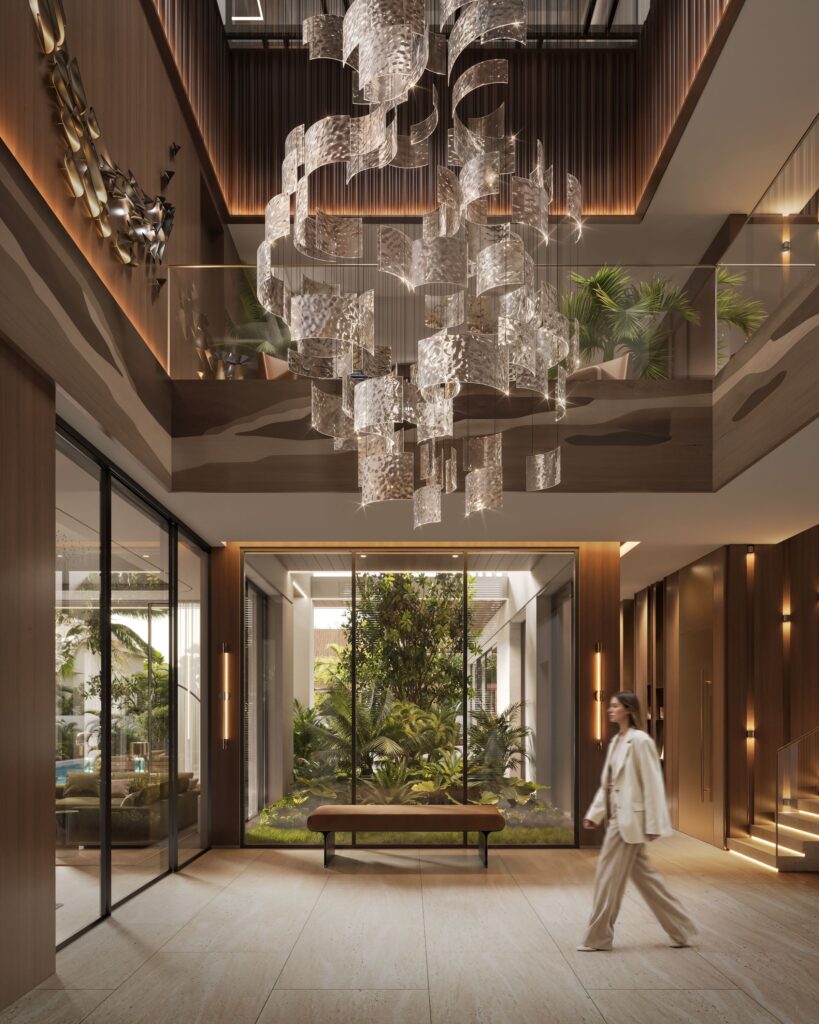 Once orientation is settled, the building envelope becomes the next major decision a residential architect in Dubai has to make - and arguably the most consequential one for long-term comfort and running cost. The envelope is the wall, roof and glazing assembly that separates the conditioned interior from an exterior that, for several months of the year, is genuinely hostile.
Glazing performance sits at the centre of this. Low-emissivity, double or triple-glazed units with a low solar heat gain coefficient reduce the burden placed on cooling systems considerably, but glass is only part of the equation. Wall assemblies with adequate thermal mass and insulation moderate the swing between day and night temperatures, keeping interior surfaces - and the people near them - more comfortable without constant mechanical intervention.
Dubai Municipality requirements and LEED set the benchmark, but exceptional homes go further - prioritising long-term performance over minimum compliance.
As Quinton Murdoch often notes, an envelope specified purely to satisfy a compliance checklist is rarely the same envelope that performs well in year fifteen. Minimum compliance is only the starting point.
Once orientation is settled, the building envelope becomes the next major decision a residential architect in Dubai has to make - and arguably the most consequential one for long-term comfort and running cost. The envelope is the wall, roof and glazing assembly that separates the conditioned interior from an exterior that, for several months of the year, is genuinely hostile.
Glazing performance sits at the centre of this. Low-emissivity, double or triple-glazed units with a low solar heat gain coefficient reduce the burden placed on cooling systems considerably, but glass is only part of the equation. Wall assemblies with adequate thermal mass and insulation moderate the swing between day and night temperatures, keeping interior surfaces - and the people near them - more comfortable without constant mechanical intervention.
Dubai Municipality requirements and LEED set the benchmark, but exceptional homes go further - prioritising long-term performance over minimum compliance.
As Quinton Murdoch often notes, an envelope specified purely to satisfy a compliance checklist is rarely the same envelope that performs well in year fifteen. Minimum compliance is only the starting point.
Shade as Architecture, Not an Accessory
Shading is frequently treated as a finishing touch - a louvred screen added late in the design process to soften an elevation that has already been resolved without it. In the UAE's climate, this sequencing produces homes that need shade and receive it as an afterthought, rather than homes that were designed around it from the start. Deep overhangs, recessed loggias, perforated screens inspired by the traditional mashrabiya, and carefully positioned solid volumes all reduce direct solar exposure while allowing daylight and airflow to continue reaching interior spaces. Used well, shade becomes a defining architectural language rather than a mitigation strategy - it shapes the rhythm of an elevation, the quality of light inside a room, and the comfort of a terrace at three in the afternoon in July. The distinction matters most at the threshold between inside and outside, where Gulf homes spend a disproportionate amount of their design budget. A pool terrace or outdoor majlis that is genuinely usable through the middle of the day - not just in the cooler hours of morning and evening - depends entirely on shading decisions made at concept stage, not on a market umbrella added after handover.Air, Humidity and the Discipline of Passive Comfort
Heat is only half of Dubai's climate challenge. Humidity, particularly along the coast, behaves differently and demands a different response. A home can be shaded and well-insulated and still feel uncomfortable if moisture-laden air is allowed to stagnate in enclosed spaces, or if condensation is left unmanaged within the building fabric. Passive ventilation strategies - cross-ventilation paths, stack effect through internal voids, and carefully positioned operable openings - reduce reliance on mechanical dehumidification and keep air moving through spaces that would otherwise trap moisture. These strategies work only when they are planned into the section of the building from the outset, since retrofitting airflow paths into a completed structure is rarely possible without significant intervention. Indoor air quality, informed by frameworks such as the WELL Building Standard, has become an increasingly central part of this conversation for clients who understand that a luxury home should support wellbeing as thoroughly as it supports comfort. Ventilation, filtration and humidity control are no longer treated as background mechanical concerns, but as design decisions with a direct bearing on how a home feels to live in.Landscape and Water as Climate Instruments
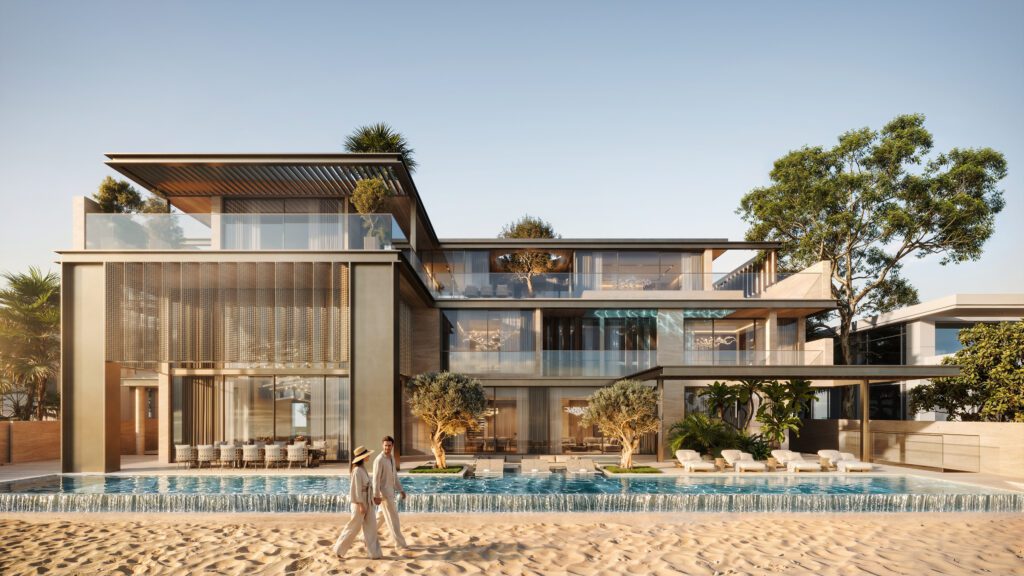 Landscape and water are rarely considered climate infrastructure, yet in the Gulf they function as exactly that. A well-placed water feature, a shaded planting strip along a western boundary, or a courtyard garden positioned to channel prevailing breezes can measurably soften the microclimate immediately surrounding a home.
This approach is evident in projects such as Villa Aurea on Palm Jumeirah and Villa Miro in Umm Al Sheif, where the landscape was designed alongside the architecture, allowing planting, water, and shade to work together with the building.
As Margaret Pluta has observed, a landscape plan drawn up in isolation from the architecture rarely earns its keep. When landscape, water and building are designed as one climate system, each element does more work with less material.
Landscape and water are rarely considered climate infrastructure, yet in the Gulf they function as exactly that. A well-placed water feature, a shaded planting strip along a western boundary, or a courtyard garden positioned to channel prevailing breezes can measurably soften the microclimate immediately surrounding a home.
This approach is evident in projects such as Villa Aurea on Palm Jumeirah and Villa Miro in Umm Al Sheif, where the landscape was designed alongside the architecture, allowing planting, water, and shade to work together with the building.
As Margaret Pluta has observed, a landscape plan drawn up in isolation from the architecture rarely earns its keep. When landscape, water and building are designed as one climate system, each element does more work with less material.
Designing for a Climate That Keeps ChangingCross-ventilation paths, stack effect through
A residential home in the UAE is typically commissioned to last for decades, across a climate that is not static. Recognised bodies including Villa RIBA have increasingly framed climate resilience as a core design responsibility rather than an optional enhancement, and Dubai's own building regulations continue to tighten in response to that same reality.Climate as the First Decision, Not the Last
None of this diminishes the importance of proportion, material or craft in a luxury home. It reframes where those decisions sit. A beautifully detailed room in a poorly oriented building will always be fighting its context. A well-oriented, well-shaded, well-ventilated building gives every subsequent decision - material, layout, finish - room to succeed rather than compensate. For clients commissioning a home in this climate, the message is simple: the quality of an architect is reflected in how early climate is considered - and how consistently it shapes every design decision. Planning a bespoke luxury home in Dubai? Speak to the team at Nellis Architecture to discuss your vision. Learn more about our design approach, meet our people, or get in touch to begin the conversation.Design Intent Summary
This article positions Nellis Architecture as a practice for whom climate is the starting point of design, not a constraint managed after the fact. It targets clients evaluating a residential architect in Dubai who are sophisticated enough to recognise that orientation, envelope and shading decisions made at concept stage determine a home's comfort and running cost for decades. The piece reinforces the firm's broader design philosophy - that genuine luxury is measured in long-term performance, not surface resolution - while supporting search visibility for high-value residential architecture terms.How Dubai Climate Shapes Every Decision a Luxury Architect Makes
Aug 14, 2026
Why International Clients Continue to Choose Dubai for Bespoke Residential Architecture
Aug 11, 2026
Can Architecture Make a Luxury Brand More Desirable? The Psychology Behind Premium Retail Design
July 30, 2026
Designing Oceanfront Homes That Feel Private Without Closing Off the View
July 28, 2026
Contemporary Luxury Architecture: What the World’s Best Homes Have in Common
July 9, 2026
Systems Thinking in Architecture: Designing Systems, Not Just Villas
July 7, 2026
UAE Architecture During Global Uncertainty: How Dubai’s Architecture Sector Continues to Grow Through Global Change
July 6, 2026
Architecture and Identity in the UAE | Contemporary Middle Eastern Design | Nellis Architecture
July 5, 2026
Contemporary Luxury Architecture: What the World’s Best Residential Homes Have in Common
July 2, 2026
Dubai as a Global Design Base | Luxury Architect Dubai | Nellis Architecture
June 28, 2026
Smart Home Automation Dubai | What Belongs in a Luxury Villa | Nellis Architecture
June 3, 2026
Designing for Balance, What Traditional Chinese Architecture Teaches Modern UAE Homes
May 31, 2026
Behaviour-Led Luxury Home Design Dubai | Residential Architecture UAE | Nellis Architecture
May 30, 2026
Mediterranean-Inspired Luxury Home Design Dubai | Residential Architecture UAE | Nellis Architecture
May 25, 2026
When Design Is Tested What Actually Matters | Luxury Villa Design Dubai | Nellis Architecture
May 18, 2026
Beyond Aesthetics: Designing Spaces That Last | Luxury Home Design Dubai | Nellis Architecture
May 15, 2026
Architectural Design Across the UAE | Luxury Home Design Dubai | Nellis Architecture
May 8, 2026
How We Approach Dubai Villa Interior Design on Palm Jumeirah | Nellis Architecture
May 6, 2026
How to Choose an Architecture Firm in Dubai | Luxury Villa Design UAE | Nellis Architecture
April 6, 2026
Why Longevity Is Becoming the New Definition of Luxury
April 4, 2026
The Islamic Garden Principles in Contemporary Palm Jumeirah Villa Design
April 2, 2026
The Difference Between Expensive and Valuable in Luxury Architecture
March 30, 2026
The Architecture of Shade in the UAE
March 27, 2026
Living With the Sea: What Coastal Architecture Really Requires on Palm Jumeirah
March 24, 2026
From Mashrabiya to Modern Screens: Privacy in Architecture and What It Means for Dubai Villas Today
February 15, 2026
What Makes a Palm Villa Truly Luxury | Luxury Villa Design Dubai | Nellis Architecture
February 14, 2026
Modern vs Contemporary Villas on the Palm | Luxury Villa Design Dubai | Nellis Architecture
February 13, 2026
How to Maximise Views Without Sacrificing Privacy | Luxury Villa Design Dubai | Nellis Architecture
February 3, 2026
Future-Proofing a Palm Jumeirah Home | Luxury Villa Design Dubai | Nellis Architecture
January 25, 2026
Common Mistakes When Building High-End Homes in Dubai | Luxury Villa Design | Nellis Architecture
December 29, 2025
Indoor–Outdoor Living in the Gulf | Climate, Shading and Landscape | Nellis Architecture
December 24, 2025
Designing Stillness on the Sea | 5-Star Single Residence Winner | Nellis Architecture
December 24, 2025
Designing the Extraordinary: Onyx and the Architecture of Confidence
December 22, 2025
25 Questions: The Art of a Good Architectural Brief | Nellis Architecture
December 18, 2025
Water as Experience | Pools, Rills and Thermal Comfort in Gulf Architecture | Nellis Architecture
December 17, 2025
Nellis Architecture 2025 Reflections: Culture, Clarity and the Year of Momentum
December 15, 2025
The Craft of Time: Why Enduring Architecture Matters
November 25, 2025
Sustainable Architecture for Dubai Homes
November 24, 2025
Miraia, Award-Winning 5-Star Single Residence | International Property Awards 2025
November 21, 2025
Heritage and Innovation in Dubai Architecture: How Tradition Meets Modern Design
November 07, 2025
Beachfront Resilience: Salt, Wind, And Glazing
November 01, 2025
AI In Home Design: Useful Or Hype?
September 30, 2025
Quiet Luxury and the Secret of Wabi-Sabi
September 24, 2025
Bespoke Design for Dubai Homes
August 15, 2025
Full Circle Moments and Firsts: A Conversation with Anastasia, Intern at Nellis Architecture
August 11, 2025
Seeing Beyond the Surface: My Journey in Architectural Visualisation
July 22, 2025
When the Brief Comes Pre-Built. A studio reflection with Pieter, Ben and Quinton | Nellis Architecture
July 9, 2025
Introducing Margaret – and Why Landscape Architecture Isn’t Just “Nice to Have”
July 1, 2025
Living Tomorrow: Reflections on the Future of Home Design
June 3, 2025
Building Trust Not Just Buildings: Marketing the Nellis Way
April 14, 2025
How the World Got Smaller: Architecture, Tech, and Keeping Design Real
May 1, 2025
Crafting Light, Telling Stories: A Reflection on Milan Design Week 2025
March 19, 2025
Using Historical Learnings Today
February 2, 2025
Visiting Vitrocsa in Switzerland: Nellis Architecture x GLASSLINE
January 31, 2025
Crafting Wellness at Nellis Architecture: A Year of Reflection and Growth
December 20, 2024
Nellis Architecture X Bauhaus: The Power of Collaboration in Property Projects
December 6, 2024
Lee Nellis: A Journey Through Architecture
November 6, 2024